AI systems, creative workflows, and what's actually shipping.
Pope Leo XIV's Magnifica Humanitas and Anthropic co-founder Chris Olah's Vatican remarks make one argument: a benevolent AI future has to be designed, not hoped for. Here's why I'm building Arcanea and Starlight.
Launch a 12-day sprint and 15,000-word masterplan for flagship content, high-frequency publishing, automation pipelines, distribution loops, and measurement rituals.
Master the AI operating system that transforms Claude Code into a full creative studio. 25 commands, 80+ skills, swarm intelligence, and auto-activation. The definitive guide.
Inside the Starlight Intelligence System — a federated behavioral engine that turns raw session data into concrete instructions AI agents actually follow.
A 10,000-word flagship report on the 2025 intelligence landscape, from frontier labs to open-source ecosystems, adoption metrics, and builder-ready frameworks.
Microsoft AI launched 7 self-built MAI models — Thinking-1, Image-2.5, Code-1-Flash and more — on its own MAIA silicon. What the vendor claims, what's verifiable, and what it means for builders.
Google AI Pro got smarter on May 20, 2026 — compute-aware usage in Gemini, AI credits across Flow and Antigravity, and a cleaner base plan. Here's how to build with the new model.
More agents is not more intelligence. The architectural choice between swarm (more workers) and family (governed roles) determines whether your agent stack scales coherently or fragments under load.
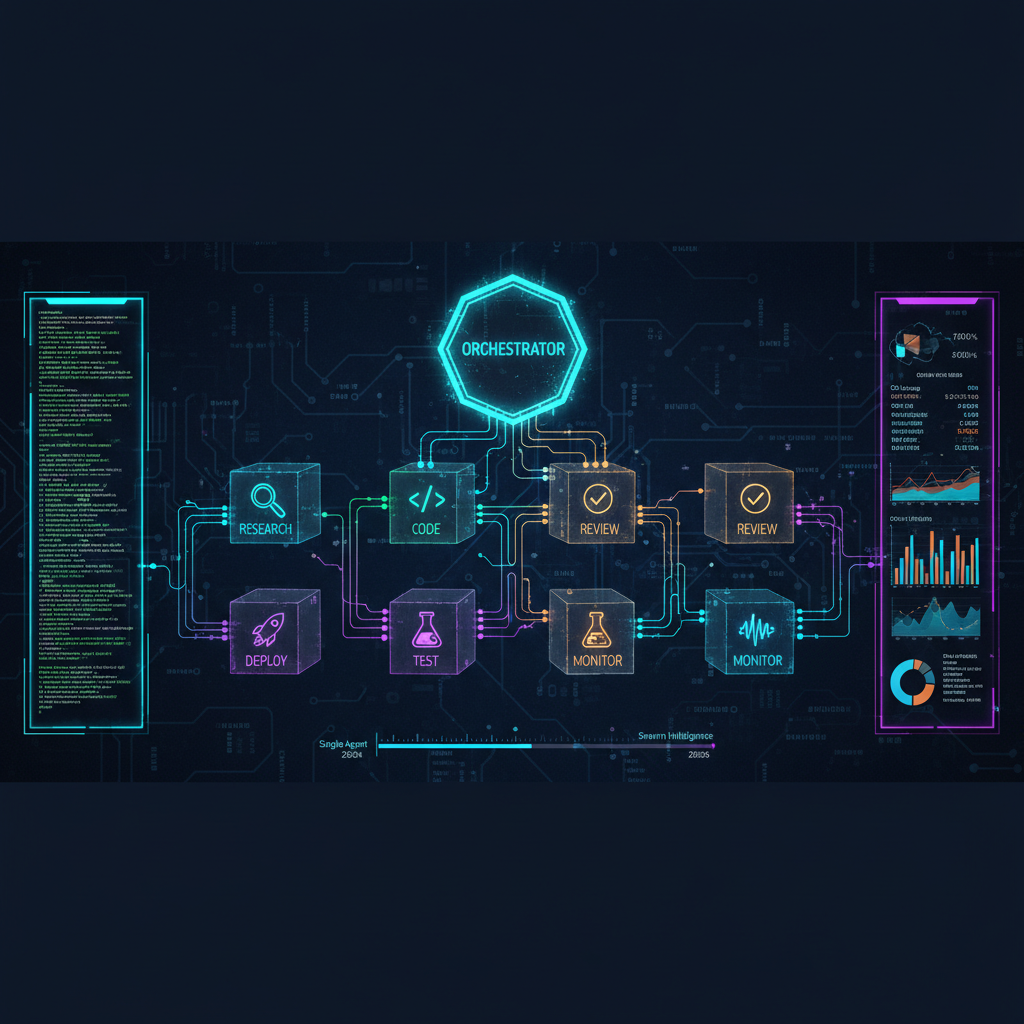
Most agent stacks are glorified workflow runners. The next leap is internal governance — an orchestrator that knows which sub-process is leading, and why.
The disembodied AI ceiling and the embodied creator OS. Why training, sleep, breath, and environment are cognitive infrastructure — for humans and for the agents we build.
Most leadership failures are not strategy failures — they are part-capture failures. An Inner HR agent helps you lead your inner team so you can lead the outer one.
AI generates infinite information. The new scarcity is relevance. A working framework for organizing goals, values, attention, and action into coherence — and for designing AI agents that know what matters, not just what is true.
Long-term memory without integration creates psychological debt inside AI systems. The IFS exile pattern, applied to agent memory architecture — and why most production stacks are accumulating it without knowing.
Hallucination, sycophancy, refusal, blandness, and overconfidence are not just failures to suppress. They are overactive parts. Treat them that way and they get easier to fix.
Most AI agents are built around one voice, one objective, one persona. Human intelligence is not single-agent — and the next generation of agentic systems will not be either. The architectural lesson IFS gives AI.
Predictive processing and active inference — Friston, Clark, Seth, Barrett — give a single framework for perception, emotion, trauma, belief, and AI. Why parts hold predictive models, and why transformation is model updating.
Every AI agent is made of six primitives — model, tool, memory, loop, spec, and deploy. Learn them once and every new framework becomes a 30-minute exercise, not a month-long investment.
A straight comparison of Vercel AI SDK, Claude Agent SDK, OpenAI Agents SDK, Google ADK, and no-code options. The central path for your first agent — and why it isn't a Vercel ad.
Trinity AI is a 5-layer conscious operating system that remembers you, reads your body, and compounds intelligence daily. Built on Claude Agent SDK, Vercel, and sovereign data principles.
How 8 broken AI-generated images led to a 5-layer quality enforcement system, a 302-page site integrity audit, and a better way to create at scale.
How to give AI agents memory that persists across sessions — CLAUDE.md, mem0, ChromaDB, and the architecture that makes agents smarter over time.
The system design decisions that matter when one person builds what teams used to require — from monolith to agents.
How AI transforms training, nutrition, and recovery — and why fitness creators who adopt it first will define the next era of online coaching.
Every major AI video tool compared — quality, speed, pricing, and which to use for short-form, long-form, and creative production.
Lessons from building an AI education system for students — the tools, the curriculum, and what 2026 learners actually need to know.
How I built a fantasy civilization with 5 Eldrian characters, 10 Gates, and a living world-state — using Claude Code, Gemini, and agentic workflows.
Most skill libraries are noise. These 10 skills changed how I ship code, content, and products — with install commands and real examples.
Head-to-head comparison of every major AI coding agent — architecture, pricing, strengths, and which one to choose for your workflow. Updated March 2026.
The model that disrupted AI pricing. How DeepSeek R1 works, where it excels, and what it means for builders choosing between open and closed models.
Every major frontier model compared — architecture, capabilities, pricing, and which to use for coding, research, creative work, and enterprise deployment.
The convergence of AI tools, zero distribution costs, and one-person production capability — why this era rewards creators who build systems.
The file Claude Code reads first every session. Structure, anti-patterns, and the exact template I use to ship 170+ pages.
MCP servers, registries, and the protocol connecting AI assistants to databases, APIs, browsers, and developer tools. Includes my 21-server production stack.
Production n8n workflows for content atomization, newsletter automation, music catalog sync, research intelligence, and AI-orchestrated publishing pipelines.
How to run Llama 4, DeepSeek, and Mistral on your own hardware — no API keys, no data leaving your machine, full model control.
The open-source AI agent with 247K GitHub stars. How it works, what NVIDIA added with NemoClaw, and what it means for personal AI agents in 2026.
The prompting techniques that survived the model upgrades — structured output, chain-of-thought, few-shot, and what to stop doing.
How to build a retrieval system over your own writing, research, and notes — so AI assistants can find and cite your past work.
Neuroscience of imagination meets generative AI. The 5-phase framework for turning mental models into shipped products — at machine speed.
The architecture behind AI agents that get smarter every session — trajectory learning, pattern recognition, and compound intelligence.
Production lessons from creating 12K+ AI tracks — prompt patterns that work, genres that stick, and the workflow behind a real music catalog.
Step-by-step guide to building a production-grade AI coding environment with ACOS, Claude Code, MCP servers, and custom agent workflows. From zero to shipping.
The deployment pipeline I use daily — Claude Code builds, Vercel deploys, MCP monitors. From code to production in minutes.
I discovered 82% of my site's images were orphaned, flagship posts used placeholder SVGs, and 3 blog posts showed the same hero twice. Here's the system I built to fix it — and how you can use it too.
ElevenLabs, Hume, and the tools turning text into natural speech — for podcasts, products, and AI assistants that talk.
The same frameworks enterprises pay millions to build — strategy, governance, talent, technology — translate directly to personal AI adoption. Here is how to build yours in 4 weeks.
Seven chips, five racks, one $1 trillion bet. A technical breakdown of NVIDIA GTC 2026 — Vera Rubin, Groq 3 LPUs, Dynamo, NemoClaw — and what enterprise AI architects should do next.
The complete AI creator toolkit — from Claude Code for development to Suno for music. Every tool battle-tested in daily production use.
Full Ship, Quick Ship, Micro Ship — energy-aware daily output. The system that turns sporadic creation into unstoppable momentum.
Energy, Mind, Craft, Voice, Capital, Circle, Legacy — the seven facets that define a complete GenCreator. Score yourself, find your superpower, unlock your growth edge.
soul.md is your personal configuration file as a creator. Learn how to build one across 7 dimensions and use it as your creative compass.
Why shipping daily beats planning weekly. The GenCreator approach to compounding creative output using AI tools and automation.
GenCreators use AI as a creative force multiplier. 12 principles, soul.md, daily shipping — the complete framework for the AI-native creator.
Discover why Answer Engine Optimization (AEO) and Knowledge Graphs have replaced traditional SEO in 2026, and how to build topical authority clusters.
How I used three competing AI design teams to build a visual identity strategy for frankx.ai — with WebGL shaders, glassmorphism hierarchies, and canvas physics. Real components, real code, real competition.
How to run Claude Code without 5 VS Code tabs killing your machine. glow + tmux + GitHub browser replaces the whole GUI stack.
A deep dive into Simon Willison's pragmatic approach to building with LLMs, focusing on truth, transparency, and architectural rigor.
A curated list of the best YouTubers, guides, and courses for mastering Anthropic's Claude Code ecosystem.
Key takeaways from Karpathy's latest AI insights
AI is making white-collar jobs vulnerable at the exact moment it's handing individuals the tools to build real businesses. Here's why the window is open — and what to do about it.
A grounded thank-you to the ecosystems, teams, tools, and creators helping us build a more human AI future.
An integrated platform combining AI music production, multi-LLM orchestration, and intelligent agent coordination. Built on Claude, GPT, Gemini, Grok, and Llama.
ACOS v10 ships 5 new safety and intelligence systems. Intelligence score jumps from 72 to 93. Here's what changed and why it matters for AI-native creators.
AI reduces DD review time by 70%. Here's exactly how multi-agent systems handle document analysis, risk scoring, and competitive mapping for institutional investors.
How to build an automated deal sourcing, screening, and scoring pipeline using n8n workflows, Claude agents, and persistent memory. From RSS feeds to scored deal cards.
A complete technical guide to the FrankX creator intelligence stack — Vibe OS, GenCreator OS, ACOS v10, Starlight Intelligence System v4, and Arcanea. How they interconnect, what each does, and why the whole is greater than the sum of its parts.
Turn Claude Code into a dedicated investment research platform with custom skills, agent profiles, MCP servers, and visual intelligence. The complete IACOS setup guide.
How we went from a Custom GPT experiment to a Gemini Gem live demo in 90 minutes, then translated it into a production blueprint for RealityDiffusion.ai.
How a messy Claude Code MCP configuration led to building mcp-doctor, a free open-source tool that diagnoses, optimizes, and manages your MCP server setup.
Anthropic's Opus 4.6 brings 1M context, 128K output, adaptive thinking, and a 67% price cut. Technical breakdown with benchmarks, migration guide, and practical implications for builders.
How we built a curated AI agent commentary system without logging sessions. The journey from raw surveillance to smart curation.
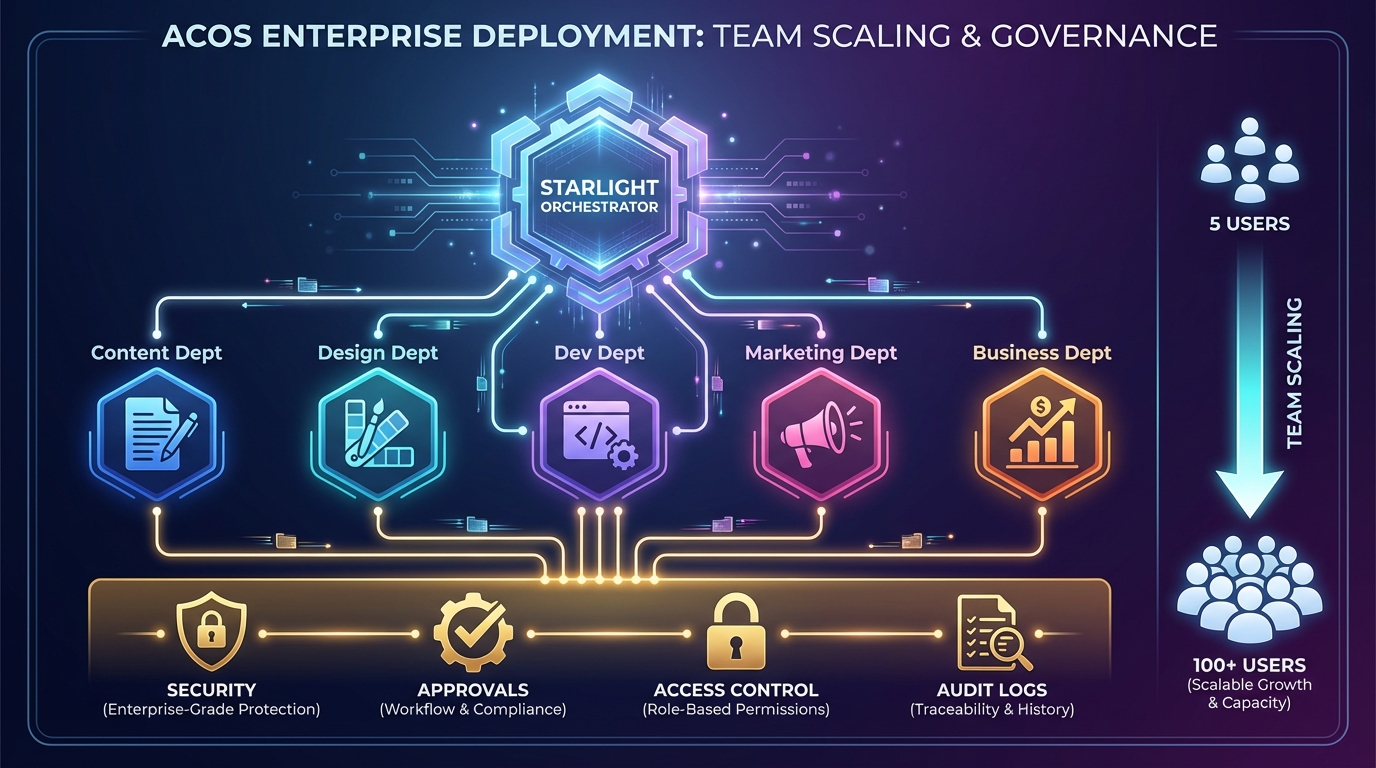
Scale Agentic Creator OS to teams with department structures, governance models, access control, and enterprise integration patterns.
Master ACOS hooks for automated quality enforcement. SessionStart, PreToolUse, PostToolUse, and Notification hooks that catch issues before they ship.
Why Agentic Creator OS is built on configuration over code, progressive disclosure, and human-AI collaboration. The principles that guide the system.
Discover which Agentic Creator OS workflows match your creator archetype. Writers, developers, musicians, entrepreneurs, course creators, and agencies—find your path.
Get Agentic Creator OS running in 10 minutes. Clone, install, configure, and run your first workflow. The fastest path from zero to AI-powered productivity.
Create your own ACOS skills with auto-activation, progressive disclosure, and real examples. From skill anatomy to publishing—the full tutorial.
Master the Model Context Protocol. Learn how ACOS connects to browsers, databases, APIs, and external tools through 7 MCP servers. Build your own integrations.
Gartner predicts 60% of AI deployments will fail without proper observability by 2027. Learn the tools and patterns that separate production systems from POCs.
Master search and AI engine optimization with ACOS. Question-based structure, FAQ schemas, AI citation optimization, and the /factory pipeline for publish-ready content.
Learn the 4 orchestration patterns that make AI agents work together: Pipeline, Parallel, Weighted Synthesis, and Iterative. Real examples from ACOS production use.
A strategic blueprint for creators, founders, and executives to deploy agentic AI systems in 2026. Updated with LangGraph, CrewAI, MCP protocol, and OCI GenAI patterns.
How FrankX shifted from 'soul-aligned AI' language to a systems architect identity. A transparent look at brand iteration for creators.
Claude Code 2.1 introduces MCP Tool Search, cutting token usage by 85% and boosting accuracy from 79.5% to 88.1%. An in-depth look at the biggest productivity upgrade since launch.
Your vertical hierarchy is too slow for multi-agent systems. The Fractal Triad topology with LangGraph, CrewAI, and MCP integration for enterprise orchestration.
Beyond simple agent comparisons. In-depth look at orchestration patterns, handoff strategies, state management, and observability for production multi-agent systems.
A practical comparison of OCI GenAI Agents, LangGraph, and CrewAI for enterprise deployments. Features, pricing, and decision framework from an AI architect's perspective.
Master Suno AI music creation with proven prompt formulas from 500+ sessions. Learn genre-specific techniques, advanced modifiers, and the anatomy of prompts that generate professional tracks.
Production workflows I use daily: blog publishing, ops reports, client onboarding, content repurposing, code review. Copy these patterns and automate the grind.
Expert predictions range from 'AGI by 2026' to 'decades away.' Here's what the actual progress means for students, personal growth, and economic opportunities right now.
Announcing the AI Center of Excellence Hub on FrankX — the six-pillar enterprise CoE framework (strategy, governance, talent, technology, data, ethics) translated for creators and individuals, with a production LLM/agent blog series to back it.
An in-depth look at the multi-agent research system powering FrankX.AI - five specialized agents, three workflow modes, and a publication pipeline optimized for the AI age.
The European Commission just announced EU Inc - a pan-European company structure promising 48-hour incorporation across all member states. Here's what it means for founders, investors, and the European startup ecosystem.
Set up your own AI operating system in 30 minutes. Step-by-step guide to installing departments, MCP servers, and running your first automated workflow.
A comprehensive guide to building production-ready AI agents on AWS using Bedrock, AgentCore, and the Strands framework. Learn the architectural patterns, security controls, and operational best practices that power enterprise agent deployments.
Most agentic AI projects stall at demo because teams optimize for the wrong things. This architectural decision framework separates shipped products from abandoned experiments.
The complete enterprise architecture blueprint for deploying production-grade LLM and agentic AI systems on Oracle Cloud Infrastructure. Six architectural planes, OCI service mapping, and the decision framework that gets you from demo to deployment.
The complete pattern library for agent orchestration on OCI: Sequential, Concurrent, Group Chat, Handoff, Orchestrator-Worker, and Human-in-the-Loop. Decision criteria, OCI service mapping, and when to use each pattern.
The definitive guide to operating production AI systems. 5-stage maturity model, evaluation pipelines, MLOps for GenAI, incident response runbooks, cost optimization, and team operating models.
Stop using AI tools like everyone else. Build a personal AI system that knows your work, executes your workflows, and gets smarter every day. Here's exactly how.
The creators who thrive in 2026 won't be those with the best tools—they'll be those with the best systems. Here's why personal AI intelligence systems are the new competitive advantage.
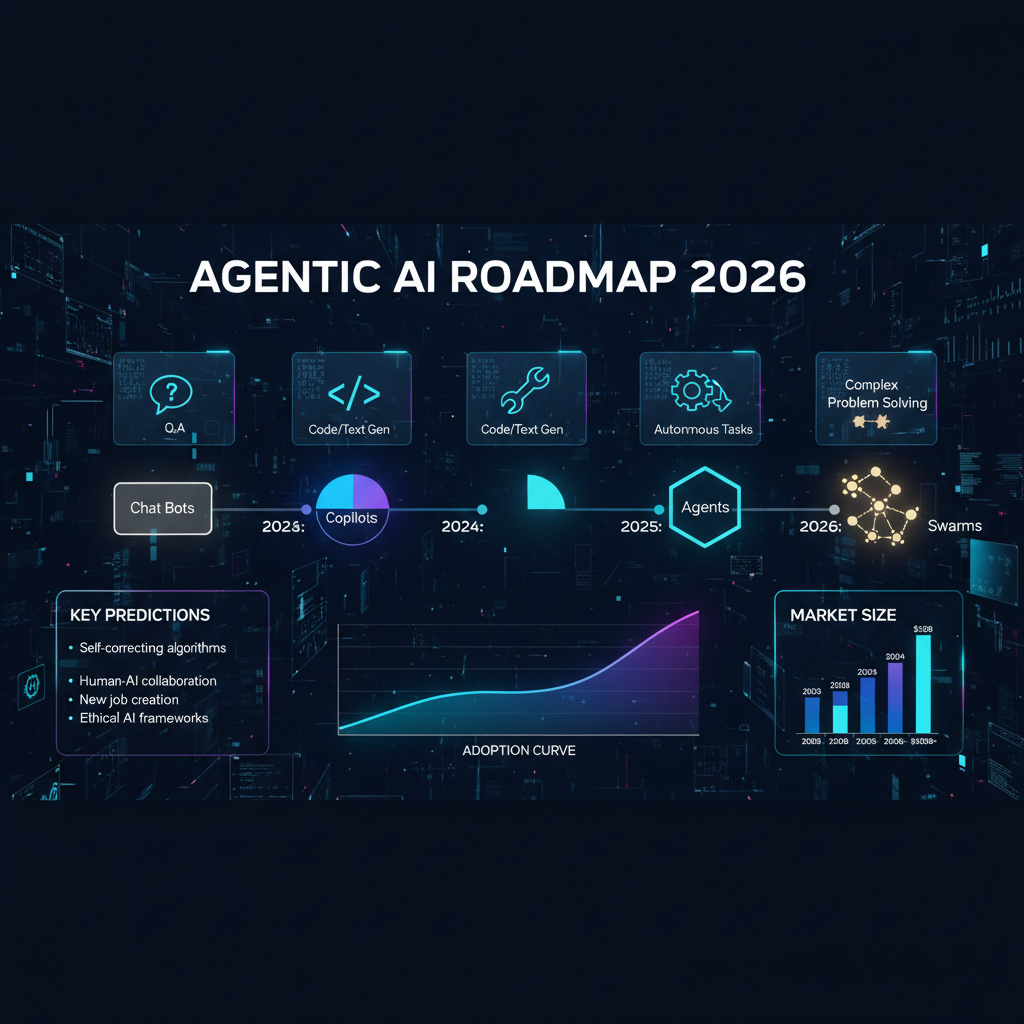
2026 marks the shift from AI demos to production deployments. Here's the architectural framework that emerged from analyzing AWS, Azure, Google Cloud, OpenAI, Anthropic, and Oracle's approaches to production-ready AI agents.
Transform from overwhelmed creator to AI-empowered content machine. Build ideation engines, research pipelines, writing assistants, and distribution automation.
Learn to build production-grade MCP servers that connect AI to your data. Master resources, tools, and prompts with the open standard revolutionizing AI integration.
Everything announced at Nvidia's CES 2026 keynote - Rubin platform, Cosmos models, autonomous vehicles, and why physical AI is the next frontier for creators and enterprises.
Create a customized AI development environment from scratch. Learn to configure Claude Code, build CLAUDE.md files, create custom skills, and connect MCP servers to your workflow.
Learn systematic prompt engineering with the 5C Framework. From basic commands to advanced techniques like Chain-of-Thought and Few-Shot Learning. Build your personal prompt template library.
Transform your ideas into cinematic soundscapes, meditation music, and motivation anthems using AI. Learn the 5-Layer Prompt Architecture and frequency science for transformative audio.
Master AI-powered development with the complete guide to coding agents. Learn to set up Claude Code, OpenCode, Cline, Roo Code, and build your evolution from basic prompts to multi-agent orchestration.
Move beyond "hit and hope" generation. A systematic workflow for using Suno AI to produce radio-ready tracks, from emotion mapping to stem mixing.
Skip the theory. In 30 minutes, you'll have a working creative system with capture, create, and ship workflows. Everything else can wait.
Learn how to design and build your own Creative Operating System (Creative OS) to enhance your creativity, productivity, and impact.
A practical, reader-focused plan to translate the Golden Age of Intelligence into content, SEO, and distribution moves that meet your audience where they are.
A 15,000-word masterwork that fuses SEO strategy, agentic operations, and automation to anchor FrankX.ai as the definitive intelligence partner for high-velocity creators and enterprises.
Stop juggling AI tools. Build a system where agents coordinate like a production team—content, dev, design, marketing working together on your projects.
A practical blueprint for enterprise technologists, founders, and creators to capture value as intelligence, automation, and intentional design converge.
The full business model behind the Agentic Creator OS — problem, segments, value proposition, channels, revenue, costs, and the one unfair advantage that ties it together.
The mission, vision, and six values that decide what FrankX builds, ships, and refuses — written so you can hold the work accountable to them.
A concise field guide to working in the Golden Age of Intelligence — six principles, four creator-stack layers, and a 90-day ritual map you can start this week.
Agentic AI doesn't wait for prompts—it acts. After building production agent systems in enterprise environments, here's what actually matters about autonomous AI.
A practical operating system for leaders who want intelligent AI integration—grounded in governance, creativity, and measurable value—across 2025 initiatives.
A strategic blueprint for creators, founders, and executives to deploy agentic AI systems in 2025, aligned with the FrankX Intelligence Atlas roadmap.
Stop treating AI audio like a slot machine. Use the RPM Model to engineer the biological state of your users. Here is specific code for your prompt strategy.
Your 1,000-agent swarm is about to make a 1,000-agent mistake. Here is how you use Constitutional Identity and the Guardian Pattern to save your reputation.
How tempo, mode, and lyrics create predictable emotional outcomes—backed by peer-reviewed research
Most creators optimize one dimension of life while the others crumble. The 7-Pillar system changes that. Here's your complete guide to building an extraordinary life as a creator.
Build a 15,000-word intelligence system that fuses Google's latest search dynamics with agentic AI production pipelines. This masterplan orchestrates the next twelve days of publishing, from flagship essays to automated supporting posts, distribution rituals, and crawl amplification.
A 15-year architect's turning point: how collaborative creation with AI revealed a path where technology amplifies human creativity, not replaces it.
Everyone has a unique creative frequency — a way of expressing that's authentically yours. Here's how to discover yours and use AI to amplify it, not mask it.
A practical, honest guide for families and working professionals who want to understand AI's real impact and how to navigate it successfully — without the hype or fear.
How to build AI-powered businesses that create genuine value, foster human connection, and generate sustainable profits — without losing quality or ethics.
After creating 12,000+ songs with Suno AI, I discovered music isn't entertainment—it's creative technology. Here's what three years of daily creation revealed.
Get weekly insights on AI, creativity, and building in public.