Production LLMs & AI Agents on OCI: Part 2 - Six Agent Orchestration Patterns
TL;DR
Not all agent workflows are equal. This pattern library maps six orchestration patterns to OCI services, with explicit decision criteria for each. Match your workflow requirements to the right pattern before you write a single line of code.

You'll master production agent architecture, tool integration patterns, and resilient multi-agent orchestration systems.
Production LLMs and AI Agents on OCI: Six Agent Orchestration Patterns
TL;DR: Not all agent workflows are equal. This pattern library maps six orchestration patterns to OCI services, with explicit decision criteria for each. Match your workflow requirements to the right pattern before you write a single line of code.
Disclosure: Independent analysis. Not affiliated with, endorsed by, or sponsored by Oracle. Uses public OCI documentation and general enterprise architecture patterns, not confidential Oracle or customer material.
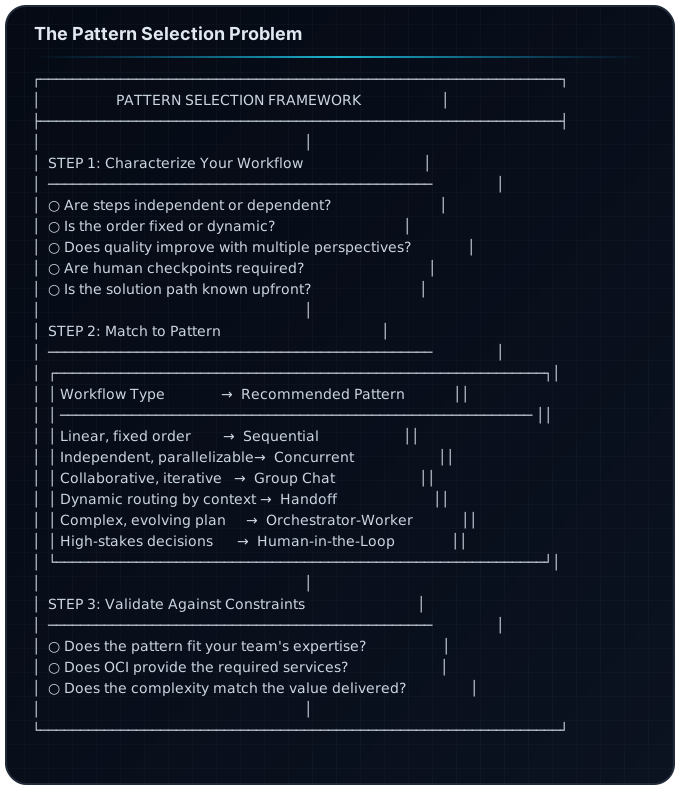
The Pattern Selection Problem
Most teams pick an orchestration pattern based on what they saw in a tutorial, not what their workflow actually requires.
This leads to:
- Over-engineering: Building complex multi-agent systems for simple linear workflows
- Under-engineering: Using linear chains when concurrent or collaborative patterns would dramatically improve quality
- Wrong abstraction: Fighting the pattern instead of leveraging it
The solution: Pattern-first design. Understand your workflow characteristics, then select the pattern that fits.
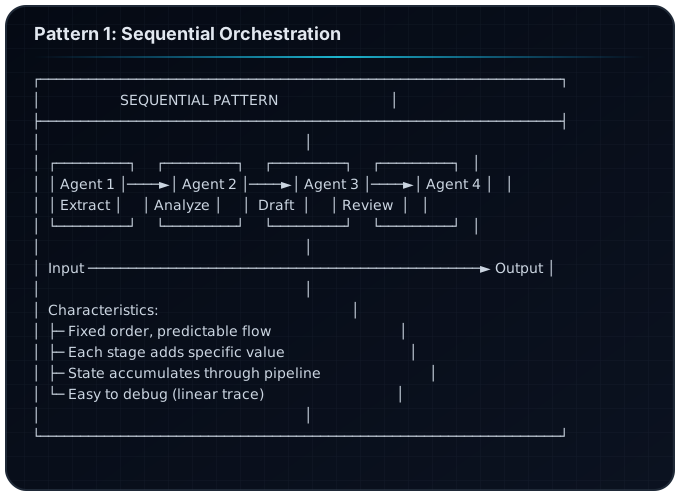
Pattern 1: Sequential Orchestration
Definition: Chains agents in a predefined linear order. Each agent processes the output from the previous agent, creating a pipeline of specialized transformations.
When to Use Sequential
| Use When | Avoid When |
|---|---|
| Stages have clear linear dependencies | Stages can be parallelized |
| Each stage adds specific value for the next | Single agent can handle the full task |
| Workflow progression is predictable | Workflow requires backtracking |
| Performance of each stage is well-understood | Agents need to collaborate dynamically |
OCI Implementation
| Component | OCI Service | Configuration |
|---|---|---|
| Runtime | OCI AI Agent Platform | Workflow definition with sequential steps |
| State | Autonomous JSON DB | Document state accumulates across stages |
| Orchestration | OKE + LangGraph | StateGraph with linear edges |
| Monitoring | OCI APM | Trace spans for each stage |
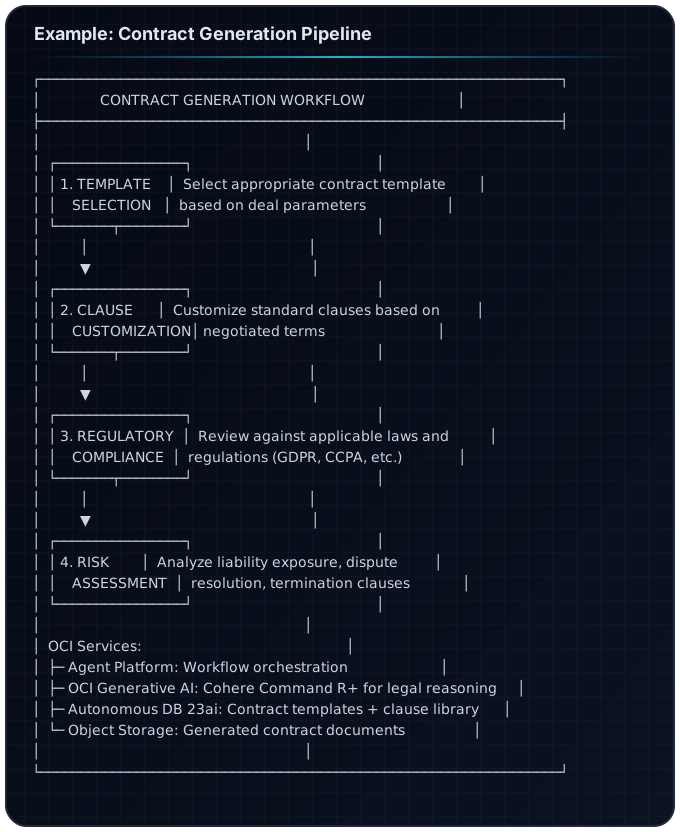
Example: Contract Generation Pipeline
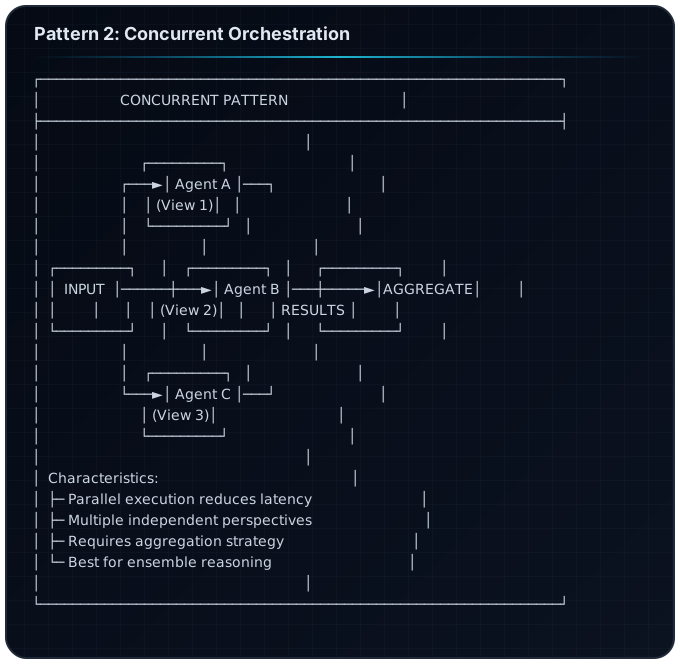
Pattern 2: Concurrent Orchestration
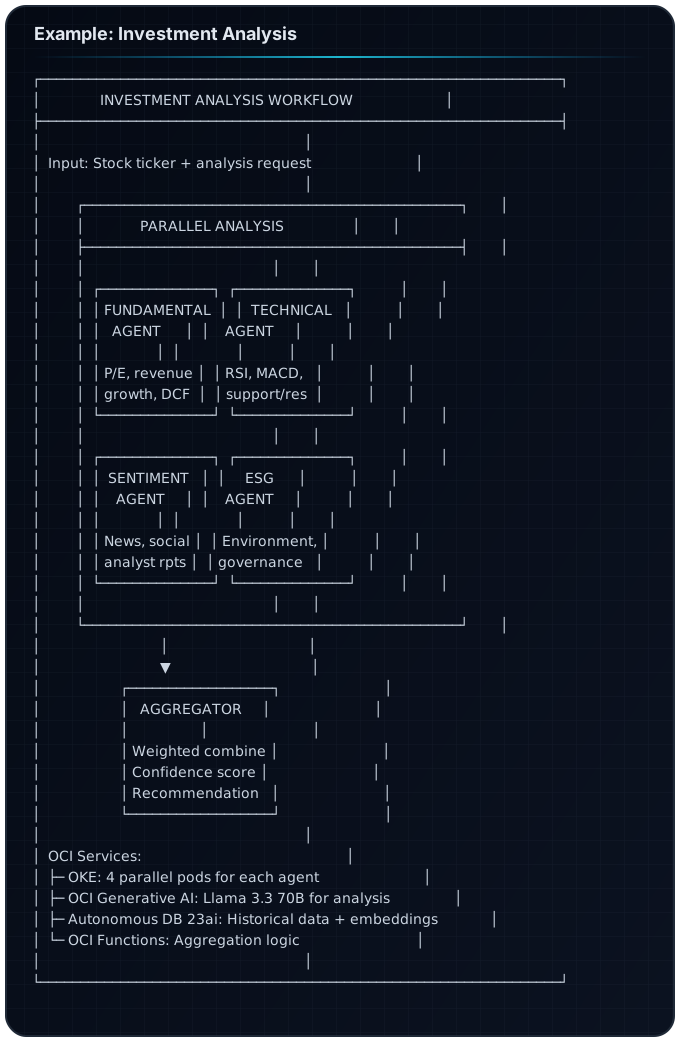
Definition: Runs multiple agents simultaneously on the same task. Each agent provides independent analysis from its unique perspective. Results are aggregated for final output.
When to Use Concurrent
| Use When | Avoid When |
|---|---|
| Tasks can run in parallel | Agents need to build on each other's work |
| Multiple perspectives improve quality | Deterministic, reproducible results required |
| Time-sensitive scenarios | Resource constraints limit parallelization |
| Brainstorming, ensemble decisions | Conflict resolution logic is too complex |
OCI Implementation
| Component | OCI Service | Configuration |
|---|---|---|
| Runtime | OKE with parallel pods | Each agent in separate pod |
| Orchestration | LangGraph parallel nodes | parallel_branch construct |
| Aggregation | OCI Functions | Weighted voting, consensus logic |
| Monitoring | OCI APM | Parallel span tracking |
Example: Investment Analysis
Pattern 3: Group Chat Orchestration
Definition: Multiple agents solve problems through shared conversation threads. A chat manager coordinates flow, determining which agents respond and when.
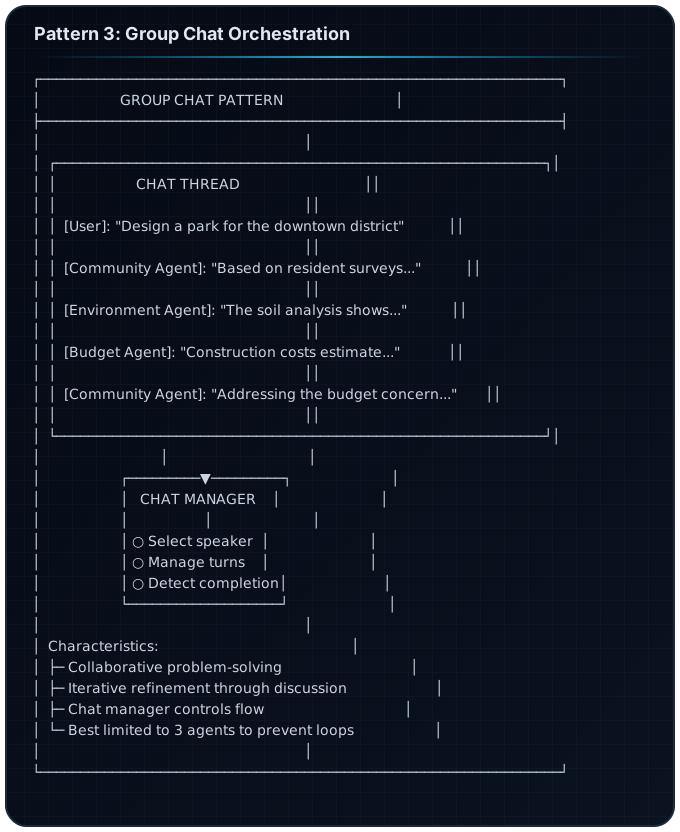
When to Use Group Chat
| Use When | Avoid When |
|---|---|
| Creative brainstorming with multiple perspectives | Simple task delegation suffices |
| Iterative refinement through discussion | Real-time processing required |
| Quality control with maker-checker loops | Clear hierarchical decision-making |
| Multidisciplinary problems | Chat manager can't determine completion |
OCI Implementation
| Component | OCI Service | Configuration |
|---|---|---|
| Runtime | OCI AI Agent Platform | Multi-agent conversation |
| Chat Manager | OCI Functions | Turn selection logic |
| Message Store | Autonomous JSON DB | Conversation history |
| Monitoring | Logging Analytics | Full conversation audit |
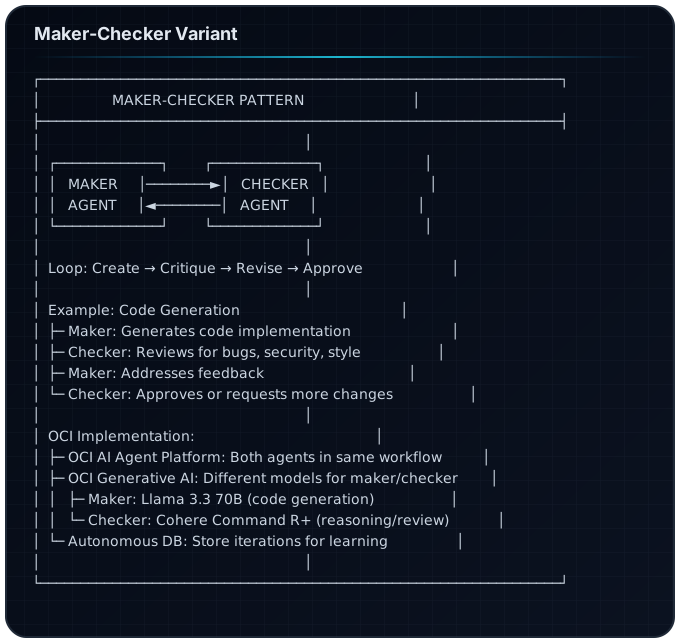
Maker-Checker Variant
A common group chat pattern where one agent creates and another validates:
Pattern 4: Handoff Orchestration
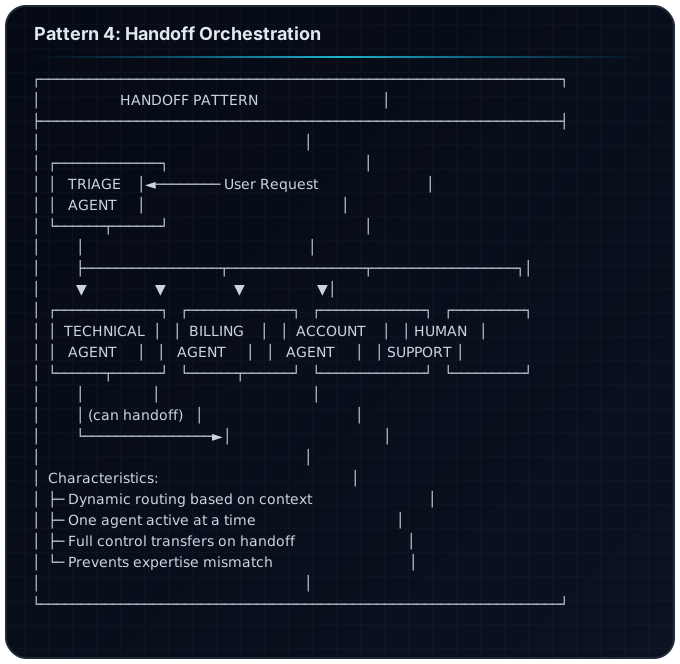
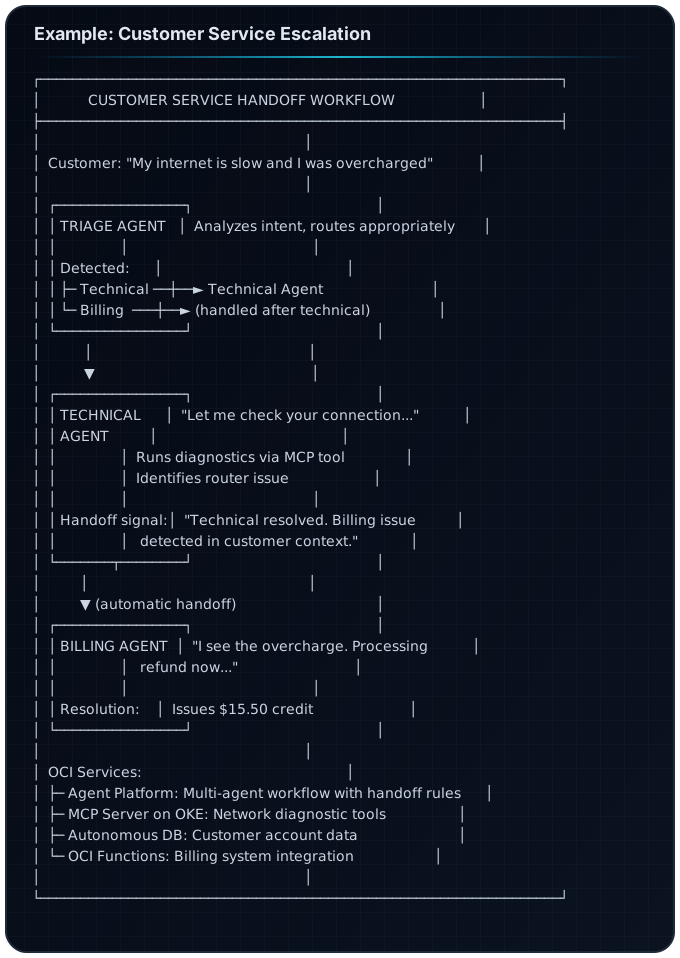
Definition: Enables dynamic delegation between specialized agents. Each agent assesses whether to handle the task directly or transfer to a more appropriate agent based on context.
When to Use Handoff
| Use When | Avoid When |
|---|---|
| Specialized knowledge required dynamically | Appropriate agent known upfront |
| Expertise requirements emerge during processing | Simple rule-based routing suffices |
| Multiple domains but one at a time | Multiple agents needed concurrently |
| Logical signals indicate capability limits | Risk of infinite handoff loops |
OCI Implementation
| Component | OCI Service | Configuration |
|---|---|---|
| Runtime | OCI AI Agent Platform | Agent-to-agent routing |
| Router | OCI Functions | Handoff decision logic |
| State | Autonomous JSON DB | Conversation context persists |
| Escalation | Oracle Digital Assistant | Human handoff integration |
Example: Customer Service Escalation
Pattern 5: Orchestrator-Worker
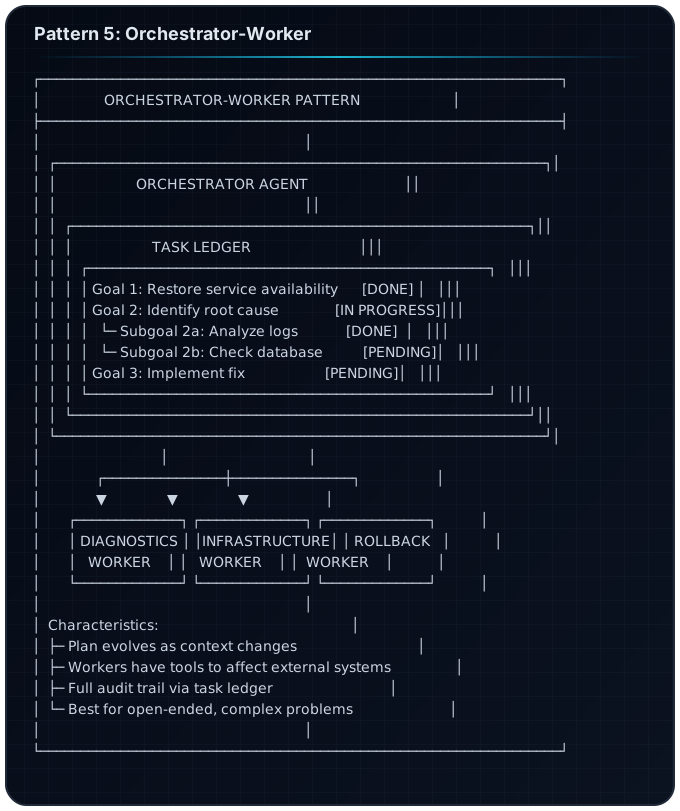
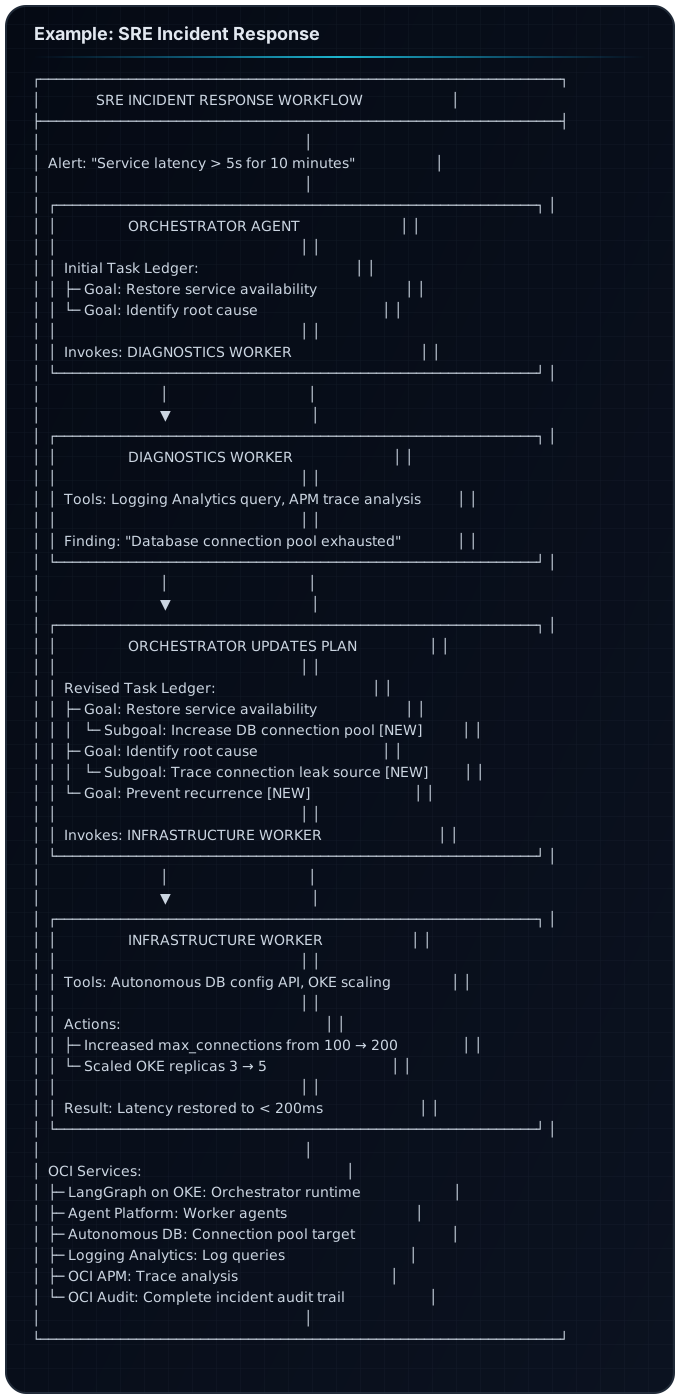
Definition: A manager agent dynamically builds a task ledger with goals and subgoals, invoking specialized worker agents as needed. The plan evolves as context changes.
When to Use Orchestrator-Worker
| Use When | Avoid When |
|---|---|
| Complex problems without predetermined solution | Solution path is deterministic |
| Multiple specialists needed to develop valid plan | No requirement for documented plan |
| Plan review required before/after implementation | Time-sensitive (pattern focuses on planning) |
| Agents interact with external systems | Low complexity where simpler patterns suffice |
OCI Implementation
| Component | OCI Service | Configuration |
|---|---|---|
| Orchestrator | LangGraph on OKE | Dynamic subgraph spawning |
| Task Ledger | Autonomous JSON DB | Real-time plan updates |
| Workers | OCI AI Agent Platform | Specialized agents with tools |
| Tools | MCP Servers on OKE | External system integration |
| Audit | OCI Audit + Logging | Complete decision trail |
Example: SRE Incident Response
Pattern 6: Human-in-the-Loop
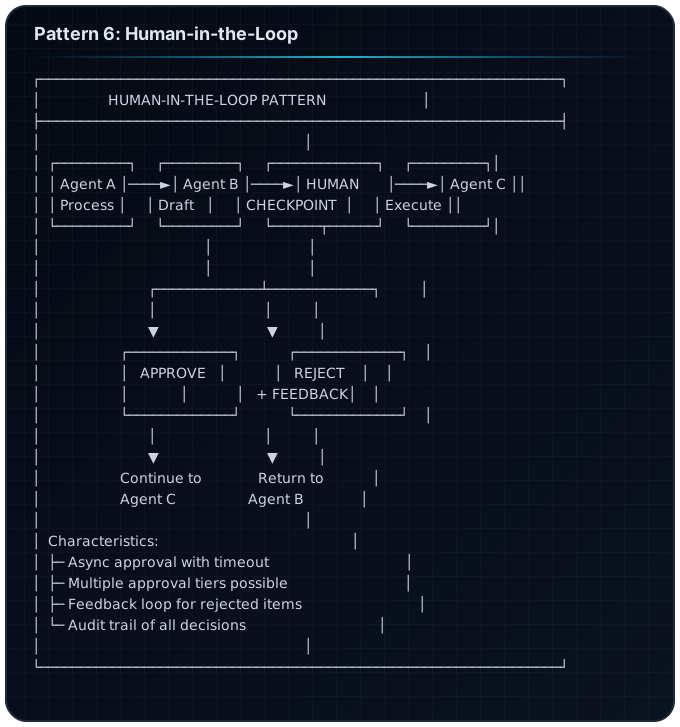
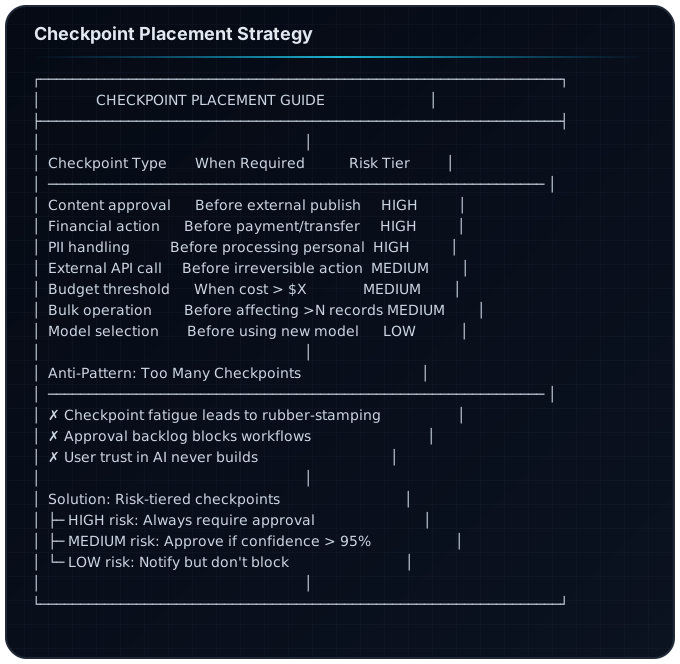
Definition: Explicit breakpoints where human approval is required before the workflow continues. Critical for high-stakes decisions.
When to Use Human-in-the-Loop
| Use When | Avoid When |
|---|---|
| High-stakes decisions (financial, legal, medical) | All decisions can be automated |
| Compliance requires human approval | Approval latency is unacceptable |
| Building trust in AI system | Volume makes human review impossible |
| Training data collection | Clear rules can replace judgment |
OCI Implementation
| Component | OCI Service | Configuration |
|---|---|---|
| Approval UI | OCI APEX | Approval queue with context |
| State Persistence | Autonomous JSON DB | Workflow paused state |
| Notifications | OCI Notifications | Slack, email, SMS alerts |
| Timeout | OCI Events + Functions | Auto-escalate on timeout |
| Audit | OCI Audit | All approval decisions logged |
Checkpoint Placement Strategy
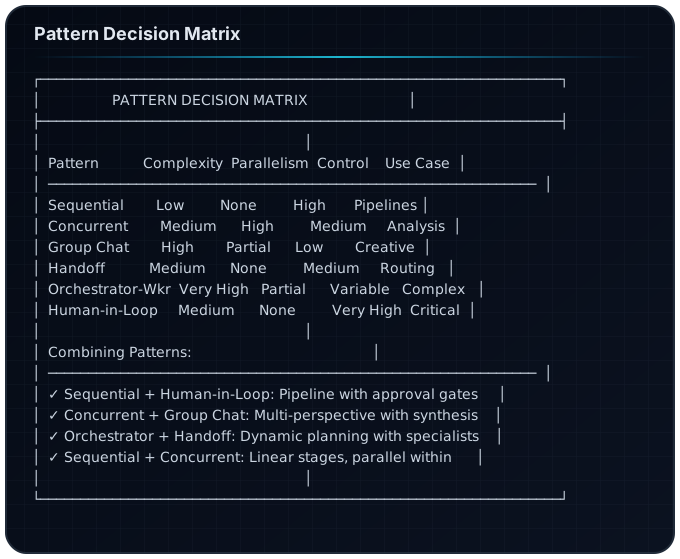
Pattern Decision Matrix
Quick reference for pattern selection:
OCI Service Mapping Summary
| Pattern | Primary OCI Service | Supporting Services |
|---|---|---|
| Sequential | AI Agent Platform | Autonomous DB, Object Storage |
| Concurrent | OKE + LangGraph | Functions, APM |
| Group Chat | AI Agent Platform | Logging Analytics, JSON DB |
| Handoff | AI Agent Platform | Digital Assistant, Functions |
| Orchestrator-Worker | LangGraph on OKE | Agent Platform, Audit |
| Human-in-Loop | APEX + Agent Platform | Notifications, Events |
What's Next
Part 3: The Operating Model — Evaluation pipelines, CI/CD for AI, incident response, cost management, and the 5-tier maturity roadmap.
Resources
- Microsoft Agent Framework Design Patterns
- Google Cloud Agent Design Patterns
- LangGraph Documentation
- OCI AI Agent Platform
- Oracle Open Agent Specification
This is Part 2 of a 3-part series on production LLM and agentic AI systems on OCI.
Part 1: Six-Plane Architecture | Part 3: Operating Model
Related Articles
- Part 1: Six-Plane Architecture — Foundation and design principles
- Part 3: Operating Model — Day-2 operations and governance
- Multi-Agent Orchestration Patterns — Coordination strategies that scale
Build your first AI system
Step-by-step guide to setting up ACOS, creating your first agent, and shipping real products with AI.
Start buildingProduction-ready architecture
Download AI architecture templates, multi-agent blueprints, and prompt engineering patterns.
Browse templatesJoin the builder community
Connect with creators and architects shipping AI products. Weekly office hours, shared resources, direct access.
Join the circle
Read on FrankX.AI — AI Architecture, Music & Creator Intelligence
Stay in the intelligence loop
Weekly field notes on AI systems, production patterns, and builder strategy.
Continue Reading
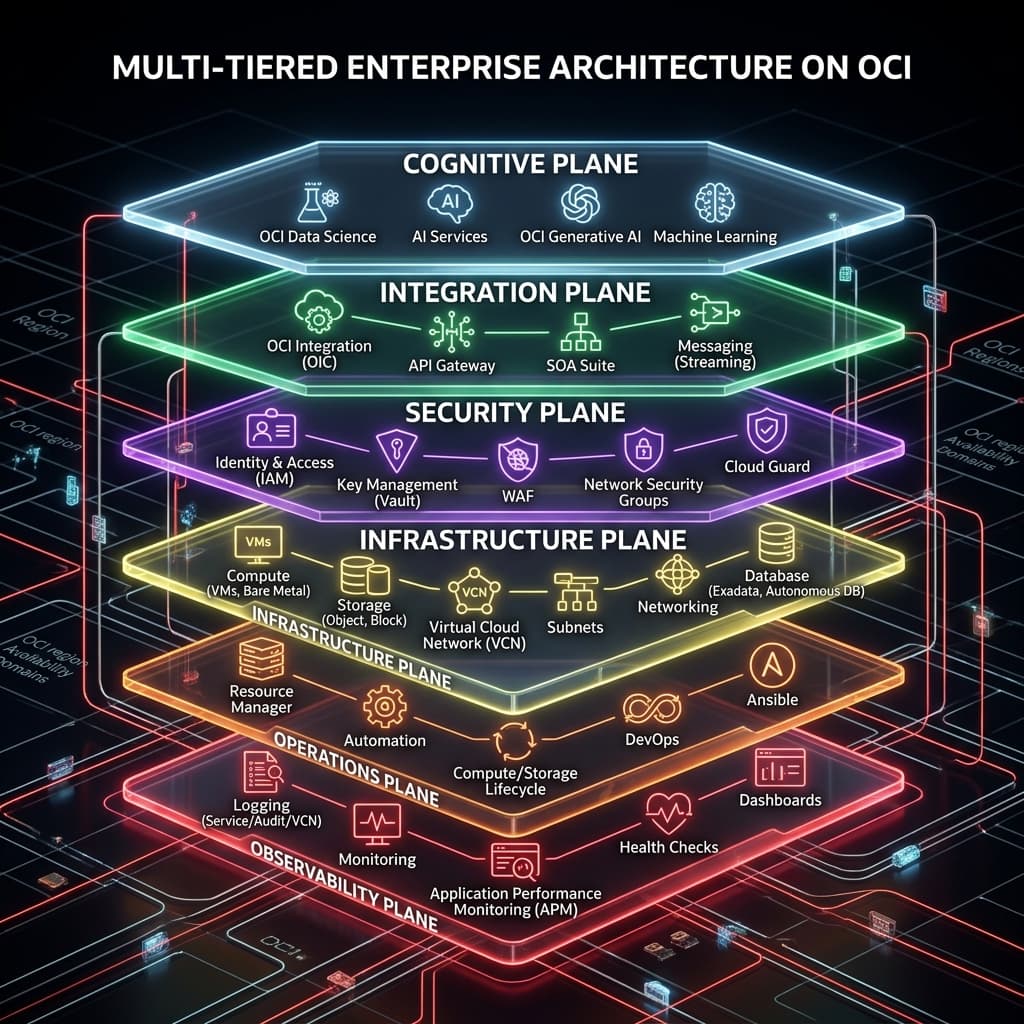
Production LLMs & AI Agents on OCI
The complete enterprise architecture blueprint for deploying production-grade LLM and agentic AI systems on Oracle Cloud Infrastructure.
Read article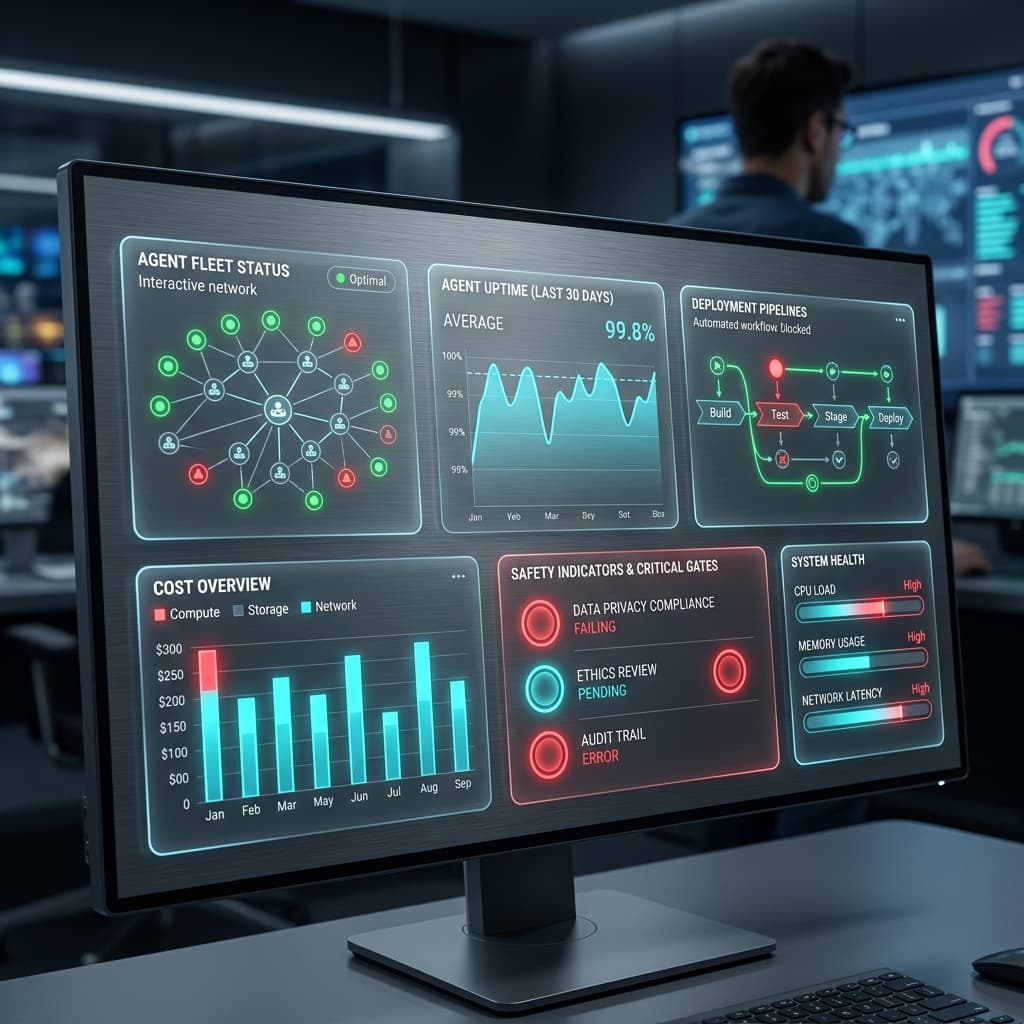
Production LLMs & AI Agents on OCI: Part 3 - The Operating Model
The definitive guide to operating production AI systems. 5-stage maturity model, evaluation pipelines, MLOps for GenAI, incident response runbooks, cost optimization, and team operating models.
Read article
The Ultimate Guide: Using ElevenLabs for Faceless YouTube Channels and Higgsf...
How to combine modern AI voice models with responsive video tools for high-retention faceless production.
Read article