Anthropic Paused the Claude Agent SDK Credit Change. Here's What Builders Sho...
TL;DR
Anthropic paused the planned June 15, 2026 Agent SDK credit change. For now, Claude Agent SDK, claude -p, and eligible third-party Agent SDK usage still draw from Claude subscription limits. That is not a permanent verdict on agent pricing. It is a temporary window to audit autonomous workflows, separate experiments from production, and build cost-aware agent systems.

Understand what Anthropic's June 2026 Agent SDK pause means, which agent tools are affected, and how to design a smarter agent stack before pricing changes return.
TL;DR: Anthropic paused the planned June 15, 2026 change that would have moved Claude Agent SDK, claude -p, and qualifying third-party Agent SDK usage away from subscription limits into a separate monthly credit. For now, nothing changes. The interesting part is not the pause. The interesting part is the signal: autonomous agents are beginning to stress the economics of flat-rate AI subscriptions.
This matters if you use tools like OpenClaw, Hermes Agent, OpenCode, Deep Agents, Codex, Claude Code, or your own Agent SDK scripts.
The market is moving from "chat with a model" to "delegate work to a compute-consuming system." That is a different cost shape, a different product category, and a serious opportunity for users, developers, builders, founders, and investors who understand the shift early.
What changed on June 15, 2026?
Anthropic's public help page says the company is pausing the Agent SDK usage changes that were planned for June 15. In plain English:
- Claude Agent SDK usage still draws from your Claude subscription usage limits.
claude -p, the non-interactive Claude Code command, still draws from your subscription usage limits.- Third-party apps built on the Agent SDK still draw from subscription limits when they authenticate through a Claude subscription.
- The previously announced monthly Agent SDK credit is not available right now.
- Anthropic says it is updating the plan and will give notice before anything takes effect.
The preserved reference plan is still useful because it tells us where the pressure is. Anthropic had planned to stop counting Agent SDK and claude -p against normal subscription limits and instead provide a separate monthly Agent SDK credit for eligible Pro, Max, Team, and Enterprise users. The preserved table showed a $20 credit for Pro, $100 for Max 5x, and $200 for Max 20x, with overage moving to usage credits at standard API rates if enabled.
That plan is paused, not erased from the economic reality. The reason is obvious if you build with agents: an agent can burn through work while you are not watching.
Why does this matter for OpenClaw, Hermes Agent, OpenCode, and Deep Agents?
Because the next generation of tools is not a chat interface. It is an operating layer.
OpenClaw puts an agent behind messaging channels. Hermes Agent explores a self-improving agent loop. OpenCode gives builders an open-source coding agent. Deep Agents gives developers a harness for longer-running agent workflows. Codex, Claude Code, and the Claude Agent SDK are turning code execution, tool use, repo navigation, and multi-step delegation into normal developer behavior.
All of these systems share the same economic problem: agents multiply usage.
A human chat session is bounded by typing speed, attention, and patience. An agent loop is bounded by permissions, model calls, tool calls, retries, context size, and how much autonomy you allow. That is why this Anthropic update is bigger than one subscription detail. It is a preview of the business model tension underneath the whole agent market.
The real shift: agents consume compute differently than chat
In a normal chat product, the user is the pacing mechanism. You ask, wait, read, ask again.
In an agent product, the system is the pacing mechanism. It can inspect files, run commands, call tools, spawn subagents, recover from errors, search the web, retry failed steps, and keep going until the task is done or the guardrail stops it.
Anthropic's Agent SDK docs make the direction clear: the SDK exposes the same agent loop, tools, and context management that power Claude Code, programmable in Python and TypeScript. It can read files, run commands, edit code, use MCP, handle sessions, use hooks, and run subagents.
That is powerful. It is also metered-workload behavior.
Claude's public pricing page shows why the details matter. As of June 16, 2026, Sonnet 4.6 is listed at $3 per million input tokens and $15 per million output tokens; Opus 4.8 is $5 input and $25 output; Haiku 4.5 is $1 input and $5 output. Anthropic also lists Managed Agents runtime at $0.08 per active session-hour, plus separate pricing for web search and code execution.
The strategic point: the market is starting to price the full work envelope, not only tokens.
For a broader view of how this fits the developer stack, read the ultimate guide to AI coding agents, the Claude Code pricing breakdown, and the OpenClaw ecosystem analysis.
What should users do this week?
Treat the pause as a free audit window.
If you use Claude Code, claude -p, OpenCode, Codex, or any Agent SDK wrapper, you should know which workflows are interactive and which are autonomous. They are not the same thing.
Interactive use:
- You are present.
- You approve sensitive actions.
- You stop bad loops quickly.
- You can see whether the agent is doing useful work.
Autonomous use:
- The agent may run when you are away.
- The loop may retry.
- Tool calls may create hidden cost.
- A flawed prompt can consume budget before it creates value.
The practical move is simple: label your workflows.
Use a subscription for interactive creative and coding flow. Use API keys or platform billing for scheduled, headless, production, or team-shared automation. Keep agents that can spend money or modify systems behind explicit limits. If a workflow would hurt if it ran 50 times by accident, it should not be treated like a casual chat session.
What should developers build differently?
Build agents as cost-aware systems from day one.
The minimum serious agent architecture in June 2026 needs:
- A budget per run.
- A tool allowlist.
- A maximum loop count.
- A maximum wall-clock runtime.
- Logging for model calls, tool calls, files touched, and final outcome.
- A dry-run mode for risky workflows.
- A way to resume from checkpoints instead of repeating the whole run.
- Model routing: Haiku for cheap classification, Sonnet for most execution, Opus only where the reasoning quality justifies it.
This is where tools like Deep Agents and the Claude Agent SDK become interesting. The winning agent frameworks will not be the ones with the flashiest demo. They will be the ones that help builders manage state, permissions, observability, retries, and cost without turning every project into infrastructure work.
If you are building on OpenCode, the advantage is model flexibility and local control. If you are building on Claude Agent SDK, the advantage is the Claude Code agent loop as a programmable library. If you are building on Codex, the advantage is OpenAI's expanding coding-agent surface across local and cloud workflows. If you are building with OpenClaw or Hermes-style systems, the opportunity is persistent personal automation, but only if permissions and cost controls are first-class.
What should founders and investors watch?
The obvious race is model quality. The better race is agent efficiency.
The best agent businesses will not merely call stronger models. They will do more useful work per dollar of inference, per minute of runtime, and per unit of human supervision.
Watch for companies that can prove:
- Lower cost per completed task, not just lower token cost.
- Higher success rate on messy workflows.
- Better approval design for dangerous actions.
- Clear separation between exploration, staging, and production automation.
- Persistent memory without privacy chaos.
- Tool ecosystems that compound without becoming security liabilities.
Investors should be careful with "agent" as a label. A wrapper around a chat model is not the same as a durable work system. The real value will accrue to orchestration layers, observability products, secure tool marketplaces, workflow-specific agents, and vertical systems where the agent has enough context to finish real work.
Founders should price around outcomes and controlled autonomy, not vibes. The buyer will eventually ask: what did the agent complete, how often did it fail, what did it cost, and what risk did it introduce?
The June 2026 agent stack: who fits where?
Here is the practical map.
| Tool | Best fit | Strategic note |
|---|---|---|
| Claude Code / Agent SDK | Repo work, scripting, custom agents, MCP-connected automation | The strongest path when you want Claude Code's agent loop inside your own Python or TypeScript system. |
claude -p | Non-interactive terminal tasks | Powerful for scripts and pipelines, but this is exactly the kind of usage pricing policies will keep watching. |
| OpenClaw | Messaging-first personal assistant workflows | Best when the interface should be WhatsApp, Slack, Telegram, or another channel people already use. |
| Hermes Agent | Self-improving, memory-heavy agent experiments | Interesting for builders exploring agents that learn preferences and workflows over time. |
| OpenCode | Open-source coding agent with provider choice | Strong for developers who want more control over models, local setup, and the coding-agent loop. |
| Deep Agents | Long-running agent harnesses | Useful when the problem is not one prompt, but a structured workflow with state and substeps. |
| Codex | OpenAI-native coding agent workflows | Best when you want OpenAI's coding-agent direction across CLI, IDE, cloud, and repo workflows. |
The high-leverage setup is not "pick one forever." It is to give each agent a job.
For example:
- Claude Code for high-context repo edits.
claude -pfor scripted one-shot analysis.- OpenCode for open-source, multi-provider coding workflows.
- Codex for OpenAI-side implementation and review loops.
- OpenClaw for messaging and personal operations.
- Deep Agents for structured long-running processes.
- A lightweight orchestration layer that tracks cost, approvals, and outcomes across all of them.
That is where builders get leverage. Not by chasing every new agent, but by assigning agents to bounded responsibilities.
The bottom line
Anthropic pausing the Agent SDK credit change is good news for builders in the short term. It keeps current workflows stable while the company rethinks the plan.
But the direction of travel is still clear. Autonomous agents are not normal chat. They consume compute differently, create different risks, and need different product economics.
The builders who win the next phase will be the ones who understand that early. They will build agents with budgets, observability, permissions, routing, and clear jobs. They will treat subscriptions as a productivity layer, APIs as a production layer, and orchestration as the compounding asset.
That is the real opportunity in June 2026.
FAQ
Did Anthropic cancel the Claude Agent SDK credit change?
Anthropic paused the June 15, 2026 change. The company says Claude Agent SDK, claude -p, and eligible third-party Agent SDK usage still draw from Claude subscription usage limits for now, and that the previously announced monthly credit is not available right now.
Does claude -p still count against my Claude subscription?
Yes, for now. Anthropic's June 15 update says claude -p usage still draws from subscription usage limits while the planned credit change is paused.
Does this affect normal interactive Claude Code?
The paused plan was about Claude Agent SDK usage, claude -p, and qualifying third-party Agent SDK apps. Interactive Claude Code already used subscription limits, and Anthropic's preserved reference text says interactive Claude Code would have continued using subscription limits even under the paused plan.
Should I build agents with a Claude subscription or an API key?
Use the subscription for interactive personal work where you are present and controlling the loop. Use API keys or platform billing for headless automation, scheduled jobs, production workflows, and shared team systems where cost attribution and limits matter.
What does this mean for OpenClaw, OpenCode, Hermes Agent, and Deep Agents?
It means builders should design around cost and permissions now. These tools can create powerful workflows, but autonomous loops can multiply usage. Add run budgets, tool limits, logging, and clear responsibility boundaries before you rely on them for daily operations.
What should founders take from this?
Agent pricing will increasingly follow completed work, runtime, tool use, and risk controls, not only chat access. Build products that can prove cost per completed task, success rate, supervision requirements, and safety boundaries.
What should investors watch in AI agents?
Watch efficiency and durability. The strongest companies will not just have impressive demos. They will show repeatable task completion, controlled autonomy, strong observability, secure tool access, and a credible path to margins as usage scales.
Is this good or bad for users?
Short term, it is good because nothing changes immediately. Long term, it is a warning to understand your agent usage. The best users will keep the creative flow of subscriptions while moving serious automation into systems with explicit budgets and controls.
Build your first AI system
Step-by-step guide to setting up ACOS, creating your first agent, and shipping real products with AI.
Start buildingProduction-ready architecture
Download AI architecture templates, multi-agent blueprints, and prompt engineering patterns.
Browse templatesJoin the builder community
Connect with creators and architects shipping AI products. Weekly office hours, shared resources, direct access.
Join the circle
Read on FrankX.AI — AI Architecture, Music & Creator Intelligence
Stay in the intelligence loop
Weekly field notes on AI systems, production patterns, and builder strategy.
Continue Reading
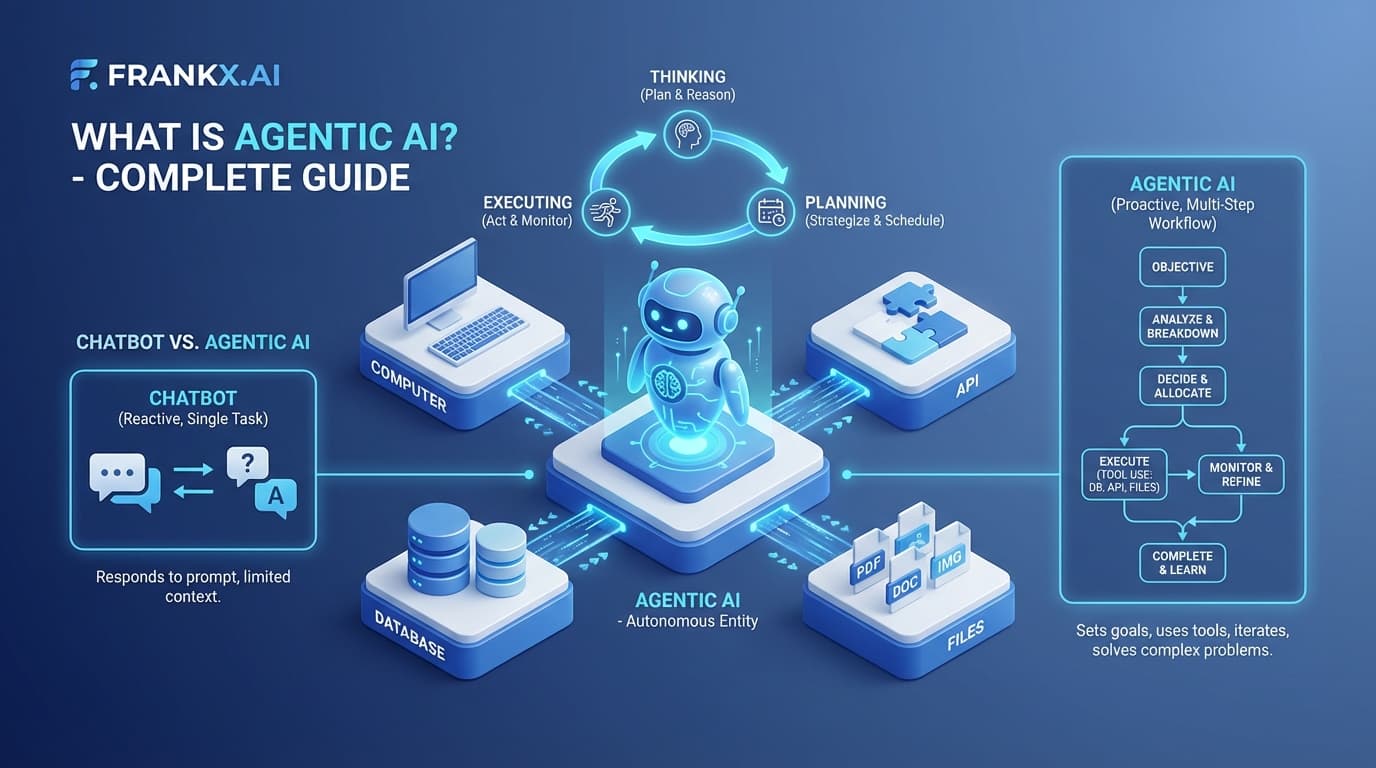
OpenClaw, NemoClaw, NanoClaw: The AI Agent Ecosystem
The open-source AI agent with 247K GitHub stars. How it works, what NVIDIA added with NemoClaw, and what it means for personal AI agents in 2026.
Read article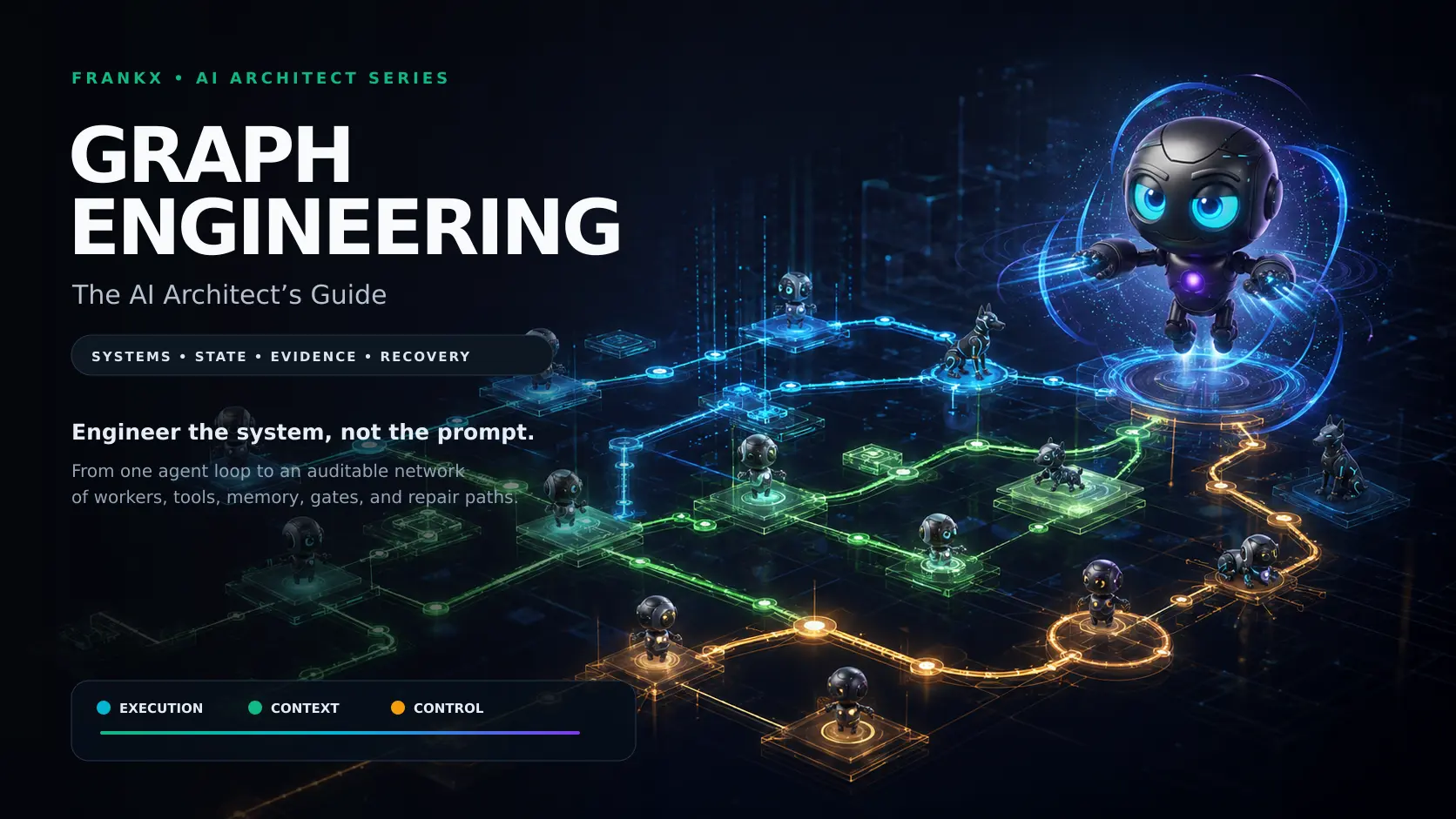
Graph Engineering: AI Architect’s Guide to Reliable Agents
Execution, context and control graphs for reliable AI agents, with runtime choices, failure modes and a 90-day adoption plan.
Read article
The AI Agents Worth Evaluating in August 2026: The Definitive Field Guide
Claude Code, ChatGPT Work, Hermes Agent, Manus, Devin, Cursor, and Viktor compared by job, autonomy, and unit economics. What to evaluate on August 21, 2026.
Read article