What is Agentic AI? The Shift From Tools to Collaborators
TL;DR
Agentic AI doesn't wait for prompts—it acts. After building production agent systems in enterprise environments, here's what actually matters about autonomous AI.

Understand the real difference between chatbots and agents, with practical examples.
What is Agentic AI? The Shift From Tools to Collaborators
The AI that writes this article also reads my code, runs my tests, and ships my features.
TL;DR
Agentic AI doesn't wait for prompts—it takes action. Traditional AI answers questions. Agents complete tasks autonomously: reading files, executing code, browsing the web, making decisions. Think less "smart search engine," more "junior developer who never sleeps." The shift matters because agents handle complex workflows that used to require human oversight at every step.
For the August 2026 product field guide — Mira, Viktor, Hermes, ChatGPT Work, Claude Cowork — read The AI Agents Worth Evaluating in August 2026.
The Difference That Matters
ChatGPT answers questions. Claude Code builds my projects.
That's the difference in one sentence.
Traditional AI is reactive. You ask, it responds. Agentic AI is proactive. It identifies what needs doing, breaks work into steps, executes each one, handles errors, and keeps going until the task is complete.
I work with both daily. Traditional AI helps me think. Agentic AI helps me ship.
What Makes AI "Agentic"
Four capabilities separate agents from chatbots:
1. Tool Use
Agents don't just generate text—they take action. They can:
- Read and write files
- Execute code
- Browse websites
- Query databases
- Call APIs
Claude Code reads my codebase, understands the architecture, writes implementations, runs tests, and commits changes. That's not a chat interface. That's a collaborator.
2. Reasoning
Before acting, agents plan. They break complex tasks into steps, consider multiple approaches, and adjust when things don't work.
Ask a chatbot to "build a login system" and you get a code snippet. Ask an agent and it:
- Examines your existing auth setup
- Identifies the framework you're using
- Writes code that matches your patterns
- Tests the implementation
- Fixes errors it finds
3. Memory
Agents maintain context across sessions. They remember what they've learned about your project, your preferences, your coding style.
My Claude Code sessions build on previous work. It knows my Next.js structure, my component patterns, my naming conventions. Each session starts where the last one ended.
4. Autonomy
The defining trait. Agents make decisions without asking permission for every step. You define the goal; they figure out how to reach it.
This morning, I said: "Fix the TypeScript errors in the build."
Claude Code found 12 errors across 8 files, understood the type mismatches, fixed each one appropriately, ran the build to verify, and reported completion. No hand-holding required.
Real Examples
My Daily Workflow
I produce 12,000+ songs with Suno AI, build enterprise production systems, and maintain this website. Agents handle the heavy lifting:
Content creation: I outline ideas. Agents research, draft, fact-check, and format. I edit and add my perspective.
Code development: I describe features. Agents implement, test, and debug. I review and refine.
Research: I ask questions. Agents search the web, synthesize sources, and organize findings. I draw conclusions.
Production Systems
I architect enterprise AI solutions. Agentic patterns appear everywhere:
- RAG pipelines that autonomously retrieve, process, and synthesize information
- Code review agents that analyze PRs, identify issues, and suggest fixes
- Monitoring agents that detect anomalies and trigger responses
These aren't experiments. They're production systems handling real workloads.
The Practical Shift
Traditional AI changed how we search for information. Agentic AI changes how we work.
The creator who learns to collaborate with agents gains leverage. Not the "10x developer" cliche—something more fundamental. The ability to execute at a scale that wasn't possible before.
I don't have a team of developers. I have Claude Code. I don't have a research department. I have Perplexity. I don't have a music producer. I have Suno.
Each tool amplifies what I can do. Agentic AI turns that amplification into automation.
Getting Started
If you're new to agentic AI, start here:
For Creators
Claude.ai with Artifacts gives you agent-like capabilities in a simple interface. Build small projects, see what's possible.
For Developers
Claude Code is the tool I use daily. It integrates with your development environment and actually builds things.
For Teams
Start with specific workflows. Don't try to automate everything. Pick one repetitive process and see what agents can handle.
The Future Isn't Distant
Every major AI lab is shipping agent capabilities. OpenAI's Operator, Anthropic's computer use, Google's Gemini agents—all arriving in 2025.
The question isn't whether agentic AI will matter. It's whether you'll be ready when it becomes standard.
I've spent years building these systems. The learning curve is real but manageable. And the payoff—being able to execute complex projects without an army of specialists—changes what's possible for independent creators.
Start small. Build something real. Learn what agents can actually do.
FAQ
What is the difference between AI and agentic AI?
Traditional AI responds to prompts with text or images. Agentic AI takes autonomous action—reading files, executing code, making decisions, and completing multi-step tasks without constant human direction.
Is ChatGPT agentic?
Base ChatGPT is not agentic—it only responds to prompts. ChatGPT with plugins and browsing adds limited agent capabilities. True agentic AI like Claude Code can read your codebase, execute commands, and complete complex tasks autonomously.
What are the risks of agentic AI?
Primary risks include unintended actions, security vulnerabilities when agents access systems, and over-reliance on automation. Production systems need proper safeguards, human oversight, and clear boundaries on agent authority.
How do I start using agentic AI?
Start with Claude.ai for simple tasks, then try Claude Code for development work. Begin with well-defined tasks before attempting complex automation. My guide to building your own AI assistant covers the practical setup.
Will agentic AI replace developers?
No. Agents amplify developers, not replace them. The best results come from human-AI collaboration—developers guiding strategy and reviewing output while agents handle implementation details. The role evolves; it doesn't disappear.
Related:
Build your first AI system
Step-by-step guide to setting up ACOS, creating your first agent, and shipping real products with AI.
Start buildingProduction-ready architecture
Download AI architecture templates, multi-agent blueprints, and prompt engineering patterns.
Browse templatesJoin the builder community
Connect with creators and architects shipping AI products. Weekly office hours, shared resources, direct access.
Join the circle
Read on FrankX.AI — AI Architecture, Music & Creator Intelligence
Stay in the intelligence loop
Weekly field notes on AI systems, production patterns, and builder strategy.
Continue Reading
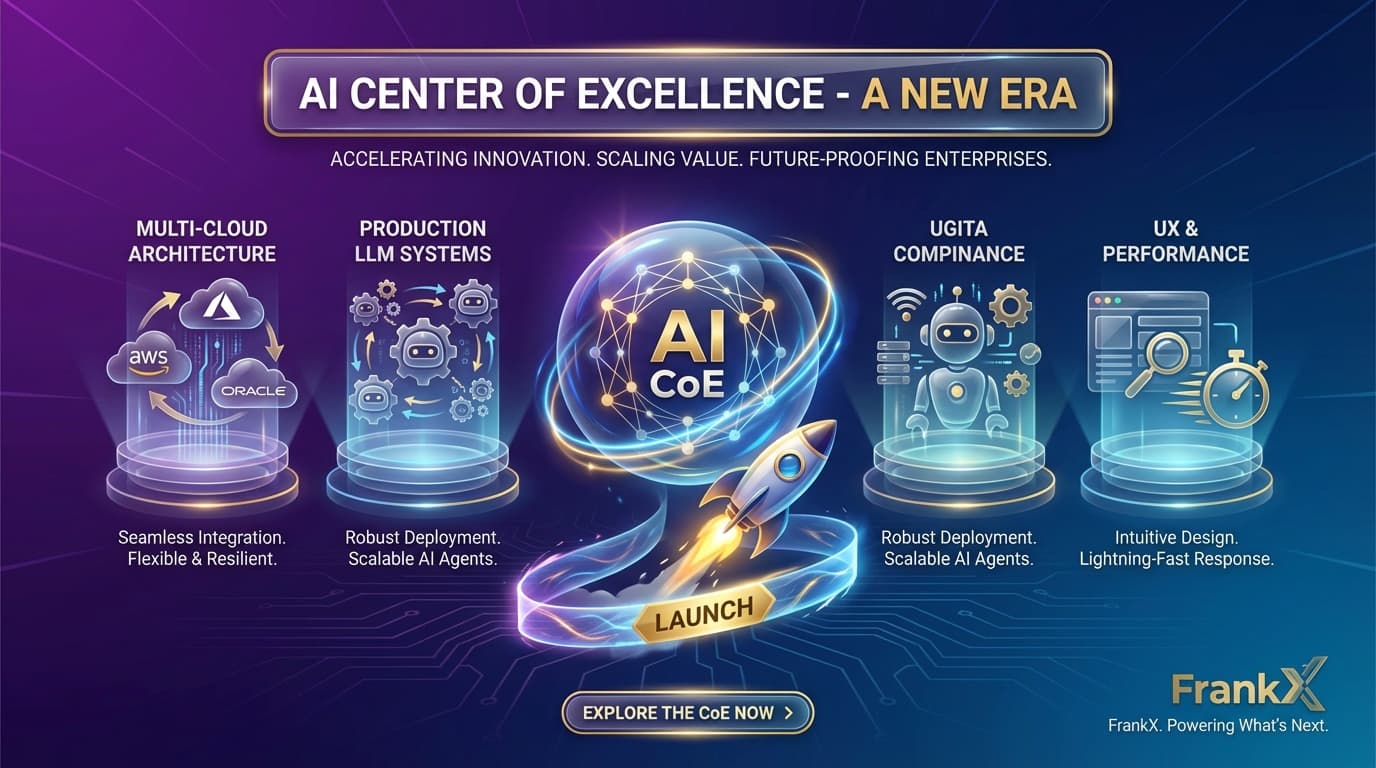
Launching the AI Center of Excellence: A New Era for FrankX
We are deploying the AI CoE Hub, a production-grade LLM/Agent blog series, and massive UX enhancements. See how we are transforming from tech-overwhelmed to AI-empowered.
Read article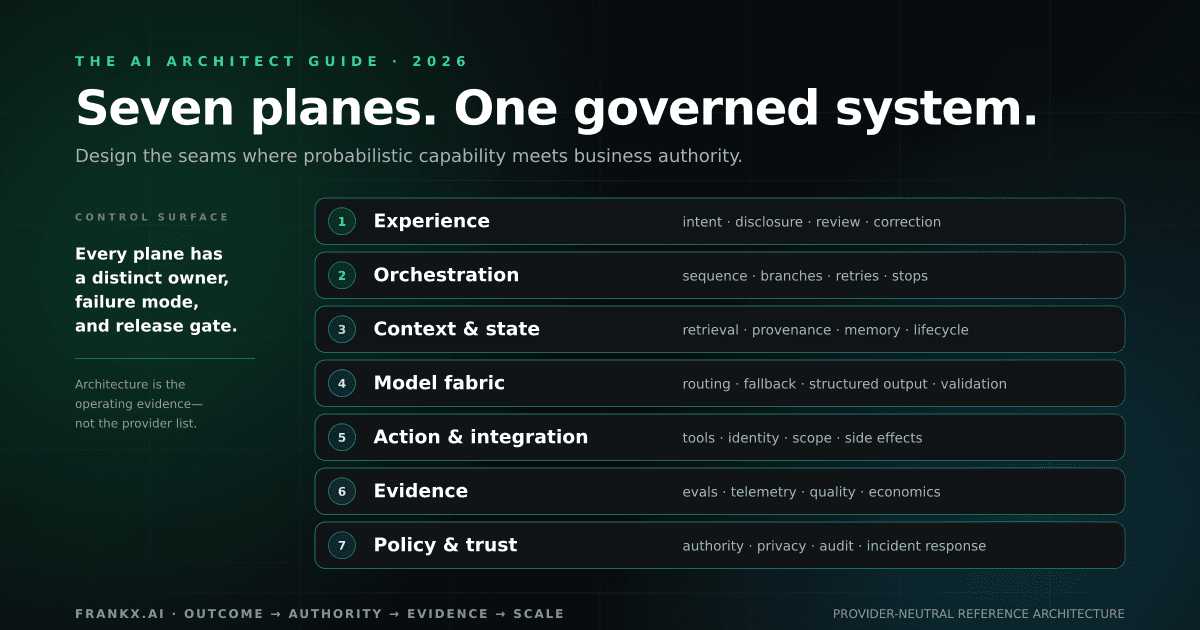
The AI Architect Guide 2026
A field guide to the decisions, system planes, evidence gates, and operating artifacts required to turn AI capability into a reliable workflow.
Read article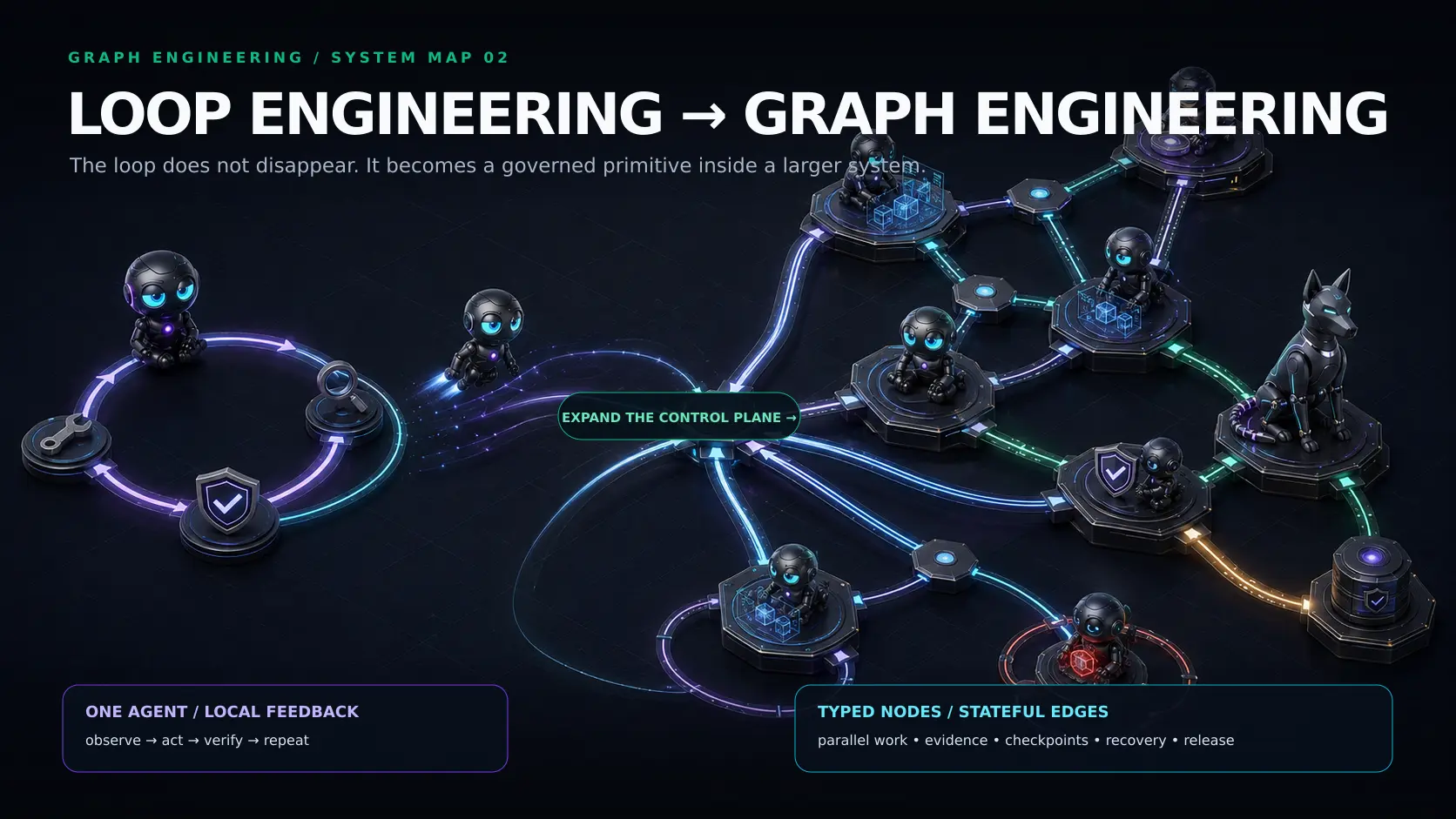
Claude Agent Engineering: Loops, Workflows and Graphs
Map Claude Code loops, subagents, Skills, teams and dynamic workflows into a production graph with explicit state, gates and recovery.
Read article