The Best AI Tools for Creators in 2026: A GenCreator's Production Stack
TL;DR
— This is the complete AI creator stack used in daily production: Claude Code for development, Claude and Gemini for content, Suno for music, n8n for automation, Next.js + Vercel for publishing, Figma + Canva for design, and Resend for email. Every tool here is in active.

You'll have a clear picture of the production-grade AI tools that power a professional creator workflow in 2026, organized by creative domain.
TL;DR — This is the complete AI creator stack used in daily production: Claude Code for development, Claude and Gemini for content, Suno for music, n8n for automation, Next.js + Vercel for publishing, Figma + Canva for design, and Resend for email. Every tool here is in active daily use — nothing theoretical.
The Stack Philosophy
Most "best AI tools" lists are curated by people who tested each tool for 15 minutes. This list is different. Every tool here is used in production, daily, to build frankx.ai, produce music, publish content, and run automations.
The GenCreator Toolkit principle: every tool earns its place. If a tool adds friction, it gets replaced. If a tool charges for features that should be free, it gets self-hosted. If a tool locks you in, it gets an exit plan.
AI & Intelligence Layer
Claude Code — Development Command Center
Claude Code is the terminal-first AI coding agent from Anthropic. It reads your codebase, writes code, runs tests, manages git, and deploys to production — all from the command line.
Why it wins: Full codebase awareness. It does not hallucinate file paths or make up APIs. It reads your actual files, understands your patterns, and writes code that matches your conventions.
Daily use: Building pages, components, APIs, fixing bugs, writing blog content, managing deployments. This article was produced in a Claude Code session.
Claude (Sonnet/Opus) — Strategic Content
For long-form writing, research synthesis, and strategic thinking. Claude produces content that sounds human because you direct it with taste — your prompts, your voice, your editorial eye.
Daily use: Drafting blog posts, brainstorming content angles, analyzing competitor approaches, generating structured data.
Gemini (Flash/Pro) — Visual Generation
Google's Gemini models excel at image generation with remarkable prompt fidelity. Gemini 3 Pro produces 4K images with consistent style across batches.
Daily use: Blog hero images, social media graphics, product visuals, character design.
Automation Layer
n8n — Workflow Orchestration
n8n is the open-source automation platform. Self-hosted on Railway, it runs 9+ active workflows including morning intelligence briefs, content atomization, newsletter delivery, and multi-agent orchestration.
Why not Zapier/Make: n8n is self-hosted (your data stays yours), has a code node for JavaScript/Python, and costs a fraction of commercial alternatives. The GitHub repo has 50K+ stars for good reason.
Daily use: Morning briefs, content distribution, newsletter automation, webhook routing, AI agent orchestration.
GitHub Actions — CI/CD
For deployment pipelines, scheduled tasks, and repository automation. Pairs perfectly with n8n for hybrid orchestration — n8n handles complex logic, GitHub Actions handles git-native workflows.
Publishing Layer
Next.js 16 — Framework
The React meta-framework that powers frankx.ai. App Router, server components, partial prerendering, image optimization, and MDX content — the full stack in one framework.
Why Next.js: The developer experience is unmatched. File-based routing, built-in image optimization, server components for performance, and Vercel's deployment pipeline make it the obvious choice.
Vercel — Deployment & Hosting
Zero-config deployments, edge functions, analytics, and a CDN that makes your site fast everywhere. Push to main, and the site is live in under 60 seconds.
Daily use: Every git push triggers a production deployment. Vercel Analytics tracks Core Web Vitals. Preview deployments for every branch.
Resend — Email Infrastructure
Modern email API with React email templates. Powers the GenCreator newsletter, welcome sequences, and transactional emails.
Why not Mailchimp: Resend gives you programmatic control with React components for email design. Write emails in JSX, send via API, track opens and clicks. Developer-first email.
Design Layer
Figma — Interface Design
For wireframes, component design, and visual planning. Figma's collaborative features and plugin ecosystem make it the standard for design work.
Canva — Quick Graphics
For social media graphics, presentations, and quick visual assets when Figma is overkill. The AI features (Magic Write, Background Remover) save hours on repetitive design tasks.
Audio Layer
Suno — AI Music Production
Suno is the AI music creation platform that produces full-length, high-quality tracks from text prompts. Over 12,000 tracks created and counting.
The production workflow:
- Craft detailed prompts with genre, mood, instrumentation, and structure
- Generate 2-4 variations per prompt
- Select the best, refine with extend/remix
- Self-host MP3s on Vercel Blob for permanent availability
Daily use: 5-10 new tracks per day during production sessions. Genre range from neoclassical orchestral to tech house to cinematic scoring.
Analytics Layer
Google Search Console — SEO Intelligence
The primary signal for content performance. Tracks impressions, clicks, CTR, and average position for every page and query.
Vercel Analytics — Performance
Real-time Core Web Vitals, page views, and geographic distribution. Vercel Analytics runs on the edge, so the tracking itself adds zero latency.
How These Tools Work Together
The power is in the integration:
Claude Code writes the code →
  Next.js builds the page →
    Vercel deploys it →
      n8n distributes it →
        Resend emails the newsletter →
          Search Console tracks the impact
Each tool talks to the next. n8n is the glue — it connects everything via webhooks and API calls. A new blog post triggers a content atomization workflow that creates social posts, updates the newsletter queue, and pings Slack for review.
This is the GenCreator Toolkit philosophy in practice: lightweight, interoperable, composable. Every tool earns its place.
Building Your Own Stack
Your stack will be different. That is the point. The soul.md framework includes a Stack section where you document your chosen tools and why you chose them.
The key principles:
- Developer-friendly: APIs, CLI access, programmable
- Self-hostable where possible: Own your data, control your infrastructure
- Composable: Tools that connect via standard protocols (HTTP, webhooks, API)
- Proven in production: Test it for real, not just in demos
Start with what you have. Add one tool at a time. Remove anything that adds friction.
FAQ
How much does this stack cost?
The core stack (Claude Code, Suno, n8n on Railway, Vercel, Resend) runs under $100/month for a solo creator. Many of these tools have generous free tiers. n8n is free to self-host.
Can I use different AI models?
Yes — the framework is model-agnostic. Some GenCreators prefer GPT-4o, others use local models via Ollama. The principle is the same — AI as amplifier, human as director.
Do I need all of these tools?
Start with 3: an AI assistant (Claude), a publishing platform (Next.js/Vercel or WordPress), and an automation tool (n8n or Zapier). Add more as your workflow demands it.
What about video tools?
Runway, HeyGen, and ElevenLabs are excellent for video creators. The GenCreator Toolkit focuses on the tools used in daily production at frankx.ai — your stack may include video tools depending on your creative domain.
How do I evaluate new tools?
The GenCreator toolkit evaluation: (1) Does it solve a real problem? (2) Does it have an API? (3) Can I own my data? (4) Is the pricing sustainable long-term? If all four answers are yes, trial it for 7 days in production.
Build your first AI system
Step-by-step guide to setting up ACOS, creating your first agent, and shipping real products with AI.
Start buildingProduction-ready architecture
Download AI architecture templates, multi-agent blueprints, and prompt engineering patterns.
Browse templatesJoin the builder community
Connect with creators and architects shipping AI products. Weekly office hours, shared resources, direct access.
Join the circle
Read on FrankX.AI — AI Architecture, Music & Creator Intelligence
Stay in the intelligence loop
Weekly field notes on AI systems, production patterns, and builder strategy.
Continue Reading

The Ultimate Guide: Using ElevenLabs for Faceless YouTube Channels and Higgsf...
How to combine modern AI voice models with responsive video tools for high-retention faceless production.
Read article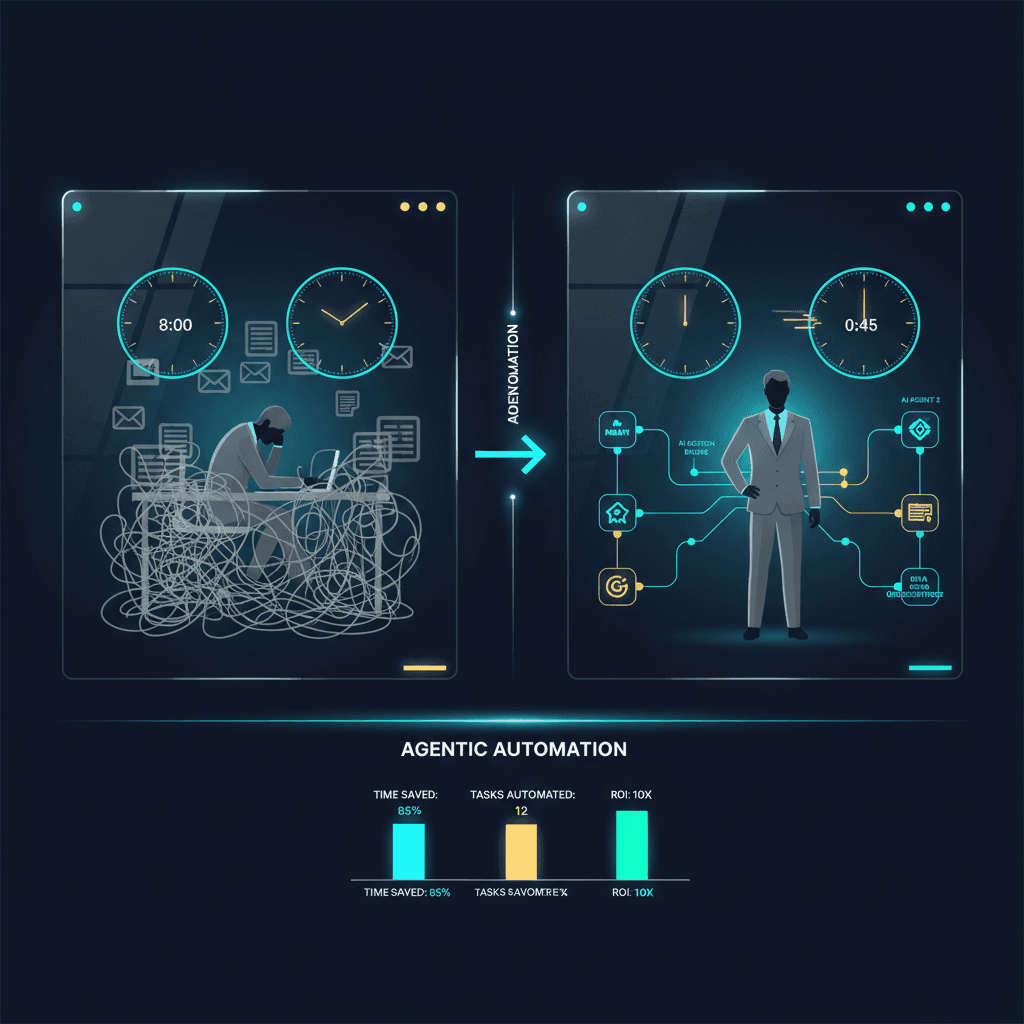
n8n Automation: 9 Workflows That Run My Creative Empire
Production n8n workflows for content atomization, newsletter automation, music catalog sync, research intelligence, and AI-orchestrated publishing pipelines.
Read article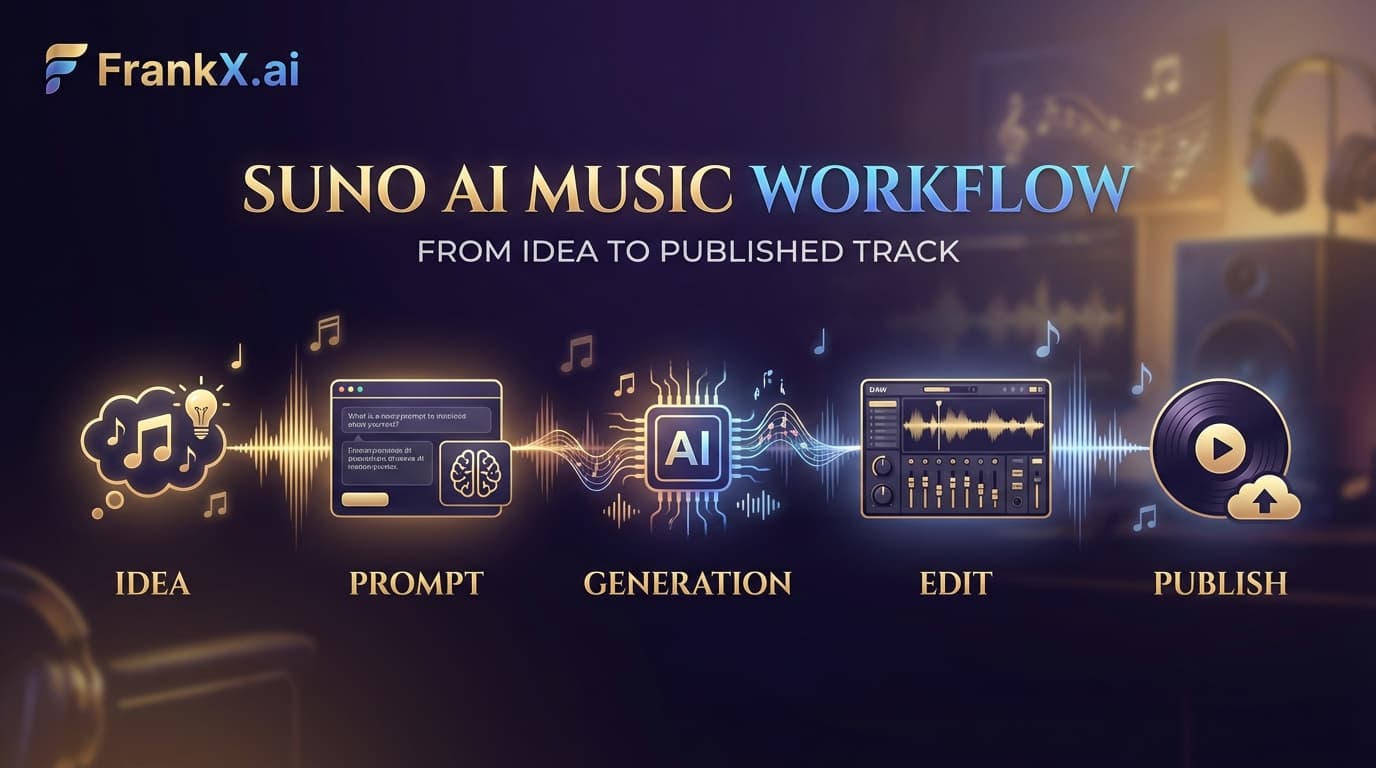
Suno AI After 12,000 Songs: What I Actually Learned
Production lessons from creating 12K+ AI tracks — prompt patterns that work, genres that stick, and the workflow behind a real music catalog.
Read article