Skip to content
FrankX.AI

The reading room

The Library

Find a book for the question you’re carrying. Follow a reading path through philosophy, spiritual traditions, creative work, and building a life of your own.

80 books · 6 curated collectionsBrowse quotesHow the Library is built

Matching books

4 books

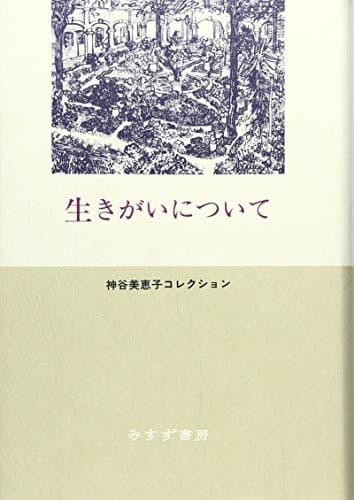
Ikigai-ni-Tsuite (生きがいについて) by Mieko Kamiya — book cover

Book review

Ikigai-ni-Tsuite (生きがいについて)

Mieko Kamiya

The foundational psychiatric study of ikigai — published in Japanese in 1966, still largely untranslated. Kamiya was a psychiatrist at the Nagashima Aiseien leprosarium in Okayama; she watched patients whose external lives had been forcibly stripped reconstruct a reason to wake up, and built a clinical theory from what she observed. Forty years before the West translated her work, she had already named the distinction between ikigai-no-taishō (the object that gives meaning) and ikigai-kan (the felt sense of having meaning).

5 min guide
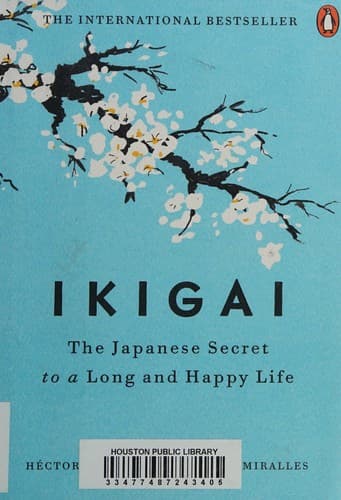
Ikigai: The Japanese Secret to a Long and Happy Life by Héctor García & Francesc Miralles — book cover

Book review

Ikigai: The Japanese Secret to a Long and Happy Life

Héctor García & Francesc Miralles

Two Spanish authors — a Tokyo-resident software engineer and a Barcelona-based novelist — travel to Ogimi, the Okinawan "village of longevity," and interview its centenarians about why they live so long and stay so engaged. The book is the one responsible for ikigai's global pop-culture moment (3M+ copies, 60+ languages). It is a useful entry, especially for the Ogimi village fieldwork, but it also imports the 2014 four-circle Venn as if it were Japanese — which it is not. Read for the Okinawan voices, hold the Venn loosely.

6 min guide
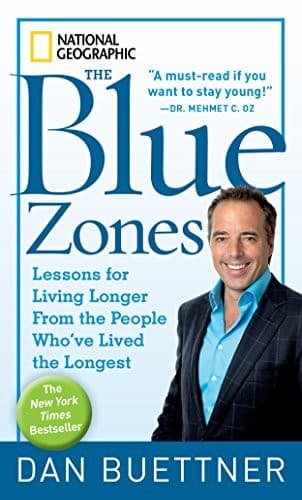
The Blue Zones: Lessons for Living Longer From the People Who've Lived the Longest by Dan Buettner — book cover

Book review

The Blue Zones: Lessons for Living Longer From the People Who've Lived the Longest

Dan Buettner

A National Geographic explorer identifies five regions on Earth where people consistently reach a hundred with the cognition of a sixty-year-old — Sardinia, Okinawa, Nicoya, Ikaria, Loma Linda — and reverse-engineers nine practices common to all five. The 2005 NatGeo cover story put the Japanese word "ikigai" on Western newsstands for the first time. The book is the field-work argument that longevity is structural, not heroic — built into how people eat, move, belong, and answer the question of what to do today.

7 min guide

Book review

The Little Book of Ikigai: The Essential Japanese Way to Finding Your Purpose in Life

Ken Mogi

A Japanese neuroscientist (Sony Computer Science Laboratories) writes the explicitly Japanese-native antidote to the four-circle Venn. Mogi offers Five Pillars — start small, release yourself, harmony & sustainability, joy of little things, be in the here and now — and treats ikigai as a daily-meaning practice, not a career-optimization puzzle. The closest English-language proxy to Kamiya's 1966 clinical thinking, written with neuroscience and Zen sensibilities in roughly equal measure.

5 min guide

What I carried forward.

Some of these sources changed how I build, teach, and create. My books turn that reading into original frameworks, with the influences kept visible.

Explore FrankX books