The short answer
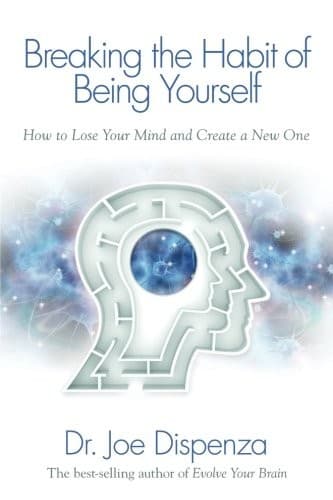
Dispenza's foundational text — the neuroscience case that personality is repeated thoughts and emotions, and that personality can be deliberately rewired. The first half is the science (neuroplasticity, conditioned response, gene expression); the second half is a four-week meditation protocol. Less metaphysical than his later books, more directly applicable.
Key Insights
- Personality is patterned thought + patterned emotion repeated until it feels like "you" — and patterns can be unlearned the same way they were learned
- The body becomes the unconscious mind: chemicals from repeated emotions train the body to expect those emotions, creating addictive emotional loops
- Memorizing a thought is repeating it until the body knows it without conscious effort — change is the same process applied to a chosen thought
- Your environment, body, and time are the three forces that anchor the old self; meditation creates a context where none of the three can pull you back
- A new state of being requires the brain to fire as if the future has already happened — until the body believes it
Quotes Worth Remembering
12 recorded excerpts. Check the named edition and location before sharing the wording.
You are not your genes. You are not your body. You are not even your mind. You are your level of consciousness.
Chapter 8 — The Quantum You
Memorizing a state of being is the means by which we move from new to known.
Chapter 10 — Reconditioning the Body
The hardest part about change is not making the same choices we did the day before.
Chapter 5 — Surviving in Survival Mode
When we feel the joy of an event before it actually happens, we have neurologically rehearsed it into existence.
Chapter 9 — Three Brains
Energy follows attention. Where you place your awareness is where you place your energy.
Chapter 8 — The Quantum You
The repetition of an emotion creates a feeling, which over time crystallizes into a temperament, which over more time becomes a personality trait.
Chapter 4 — Overcoming Your Body
The book's central neuroscience claim, stated as a chain. Each link is well-supported research; the chain is what Dispenza popularized.
Stop reciting your old story.
Chapter 11 — Pruning the Old Self
Most people try to create a new personal reality as the same personality. But the same personality always produces the same reality.
Chapter 1 — The Quantum Universe
Until you become aware of which thoughts you are unconsciously thinking, those thoughts will continue to create your life.
Chapter 6 — Three Brains
When you change your mind without changing the body, the body — running on old chemistry — pulls you back into the old mind.
Chapter 4 — Overcoming Your Body
A new personality creates a new personal reality.
Chapter 1 — The Quantum Universe
Until you can be greater than your environment, your body, and time, you cannot create a new future.
Chapter 7 — The Gap
Chapter-by-Chapter
Each chapter carries a key idea and a short summary, so you can find the argument again.
01Chapter 1 — The Quantum Universe
Reality is participatory; the observer affects the observed at every scale, including the personal.
OpenClose
Dispenza opens with quantum-mechanics framing — observer effects, probability, the field as primary. He uses this as scaffolding for the personal-change argument that follows. Strict physicists will protest the metaphors; the practical implication (your attention shapes your experience) holds independent of the metaphysics.
02Chapter 2 — Overcoming Your Environment
Environment is the most underestimated force in personal change — same room, same body, same loops.
OpenClose
Dispenza walks through how environments cue the brain into automatic states. The kitchen triggers eating; the office triggers anxiety; the bedroom triggers conflict. Without altering the environmental cues — or transcending them via meditation — willpower against them is unsustainable.
03Chapter 3 — Overcoming Your Body
The body has memorized your emotional states and will demand their familiar chemistry — withdrawal symptoms are normal.
OpenClose
Dispenza extends the addiction framework to ordinary emotions. The body, conditioned to a baseline of (say) anxiety, generates withdrawal-like symptoms when anxiety drops. This is why "I feel weird" is a sign of progress, not regression. Naming the phenomenon is most of the way to enduring it.
04Chapter 4 — Overcoming Time
The chronic re-living of the past and rehearsal of the future keeps you outside the only moment where change is possible.
OpenClose
The third leg of the stuck-self triangle. Most thought is past-recap or future-anxiety. Pure presence is rare and is the precondition for change. Dispenza's meditation practice is essentially a present-attention drill applied to identity rather than to breath.
05Chapter 5 — Surviving in Survival Mode
Chronic stress chemistry locks the brain into pattern-recognition rather than novelty-creation.
OpenClose
Dispenza explains why life under chronic threat produces the felt sense that "nothing changes." Cortisol-saturated brains pattern-match toward known threats, suppressing the creative networks needed to imagine new responses. The diagnosis is grim; the treatment is meditation that drops the stress chemistry long enough for the creative networks to come back online.
06Chapter 6 — Three Brains: Thinking to Doing to Being
Knowledge becomes experience becomes wisdom — and only the third sticks.
OpenClose
Dispenza's three-brain model: neocortex (think), limbic (do/feel), cerebellum (be/automatic). Most self-help stops at the first; books are read, ideas understood, nothing changes. Real change requires the experience that lays down emotion + memory + body, then repetition until the cerebellum encodes it as automatic.
07Chapter 7 — The Gap
The space between who you have been and who you intend to become is the meditation itself.
OpenClose
Dispenza describes the meditative experience of dissolving the known self without yet inhabiting the new self. The Gap is uncomfortable; most people race past it back to familiar discomfort. Sustained Gap-time is what allows the new self to install. Treats this as a felt practice, not a concept.
08Chapter 8 — The Quantum You
You exist as a probability before your habits collapse you into a specific person.
OpenClose
Dispenza pushes the quantum-mechanics metaphor further: each morning, you are a probability cloud; the choices and emotions of the day collapse the cloud into a particular self. Different morning meditations would collapse different selves. Whatever you think of the physics, the practical instruction is to begin each day with a deliberate self-collapse rather than an automatic one.
09Chapter 9 — Three Brains: Setting Up the Practice
Each brain region needs its own practice — thinking journals, doing rehearsals, being meditation.
OpenClose
The transition chapter from theory to practice. Dispenza outlines what each phase of the four-week protocol does to which brain layer. Ensures the reader knows which exercise targets which mechanism — without this knowledge, people skip the parts that look "boring" and miss the load-bearing pieces.
10Chapter 10 — Reconditioning the Body to a New Mind
The body is the unconscious mind; reprogramming it requires the body itself, not just the head.
OpenClose
Dispenza describes physical components of the meditation — posture, hand positions, sustained eyes-closed elevated emotion. These aren't mystical; they're practical signals to the cerebellum that "this state is now the new normal." Without the body, head-only intentions reset by lunch.
11Chapter 11 — Pruning the Old Self
You cannot install the new self until you stop watering the old one.
OpenClose
Specific exercises for catching old-self thoughts and emotions in real time and refusing to feed them. Not suppression — observation without identification. Dispenza relies on contemporary mindfulness research here. The pruning analogy is apt: the brain literally drops unused circuits over weeks of disuse.
12Chapter 12 — Creating a New Self / Meditation Instructions
You become the new self by feeling-it-now, not planning-it-later.
OpenClose
The book's practice section. Dispenza provides week-by-week meditation instructions. The pivotal technique is "feeling the elevated emotion of the future event before the event happens" — the brain's firing pattern matches what would occur if the future were already true, training the body toward it. Repeat daily, 30-60 minutes, four weeks minimum.
Best For
Frequently Asked Questions
How is this different from Becoming Supernatural?
+
Breaking the Habit (2012) is the foundational neuroscience-and-meditation book. Becoming Supernatural (2017) builds on it with energy centers, time-space metaphysics, and quantum-field claims. Read Breaking the Habit first — it stands on solid neuroscience and is the right entry point. Becoming Supernatural is the advanced practice for readers convinced by the basics.
What is the four-week meditation protocol?
+
Week 1: become aware of the unconscious states you live in. Week 2: prune the old self by witnessing patterns without identifying with them. Week 3: dismantle the body's memorization of past states. Week 4: create a new self in mind, hold it in elevated emotion, repeat until the body remembers it. Each week deepens the previous; skipping ahead doesn't work.
Do I have to believe Dispenza's framing to benefit?
+
Not really. Strip the language of "the quantum field" and you have: a structured introspection-and-visualization practice grounded in neuroplasticity. That practice produces measurable change for many readers regardless of metaphysical commitments. Treat the science chapters as the load-bearing parts; the spiritual framing as optional flavor.
How long until I see results?
+
Dispenza claims four weeks of daily 45-60 minute meditation. Most reader reports suggest 2-3 months for noticeable identity-level shifts; 6+ months for profound ones. The variable is consistency, not intensity. Two weeks of perfect practice followed by abandonment produces no durable change.
Is this compatible with mainstream psychotherapy?
+
Yes, with caveats. The neuroplasticity framework Dispenza uses is the same one that grounds CBT, ACT, and modern trauma therapy. The meditation work is complementary to, not a replacement for, professional treatment of clinical conditions. Major depression, PTSD, and similar should be addressed with a qualified therapist; the book's techniques can support but not substitute for that work.
Continue Reading
If Breaking the Habit of Being Yourself opened a door, these books walk you through it. Curated for reason, not algorithm — each entry explains why it pairs with this book.
Becoming Supernatural
by Joe Dispenza
Dispenza's 2017 sequel — pushes the framework into energy centers, time-space, and group coherence. Read after Breaking the Habit, not before.
Get the bookYou Are the Placebo
by Joe Dispenza
The middle book in the trilogy, focused specifically on mind-body healing. The most empirically grounded Dispenza book.
Get the bookThe Brain That Changes Itself
by Norman Doidge
The mainstream-science version of Dispenza's neuroplasticity claims. Doidge documents specific cases of brain rewiring in clinical settings. Read it alongside Breaking the Habit to separate the well-supported neuroscience from the speculative metaphysics.
Get the bookBuddha's Brain
by Rick Hanson
A Buddhist-meets-neuroscience treatment of essentially the same territory. Hanson is more conservative scientifically and more Buddhist culturally; the practical exercises overlap heavily with Dispenza's.
Get the bookAtomic Habits
by James Clear
Same problem (changing patterned behavior), different mechanism (environment design and habit stacking). Clear is behavioral; Dispenza is neurological. Both are useful.
Get the bookThe Power of Now
by Eckhart Tolle
Tolle is the spiritual cousin to Dispenza's Chapter 4. Where Dispenza gives you neuroscience for transcending past-future, Tolle gives you the contemplative tradition.
Get the bookGo Deeper — Videos
Each link opens a YouTube search for this book. Pick a named speaker before you treat a recording as a source.
Joe Dispenza — Breaking the Habit of Being Yourself (Talk)
Various
Dispenza presenting the book's core argument in talk form. Best for first exposure — the chapter structure he uses on stage maps cleanly to the book.
Joe Dispenza — How to Unlock the Full Potential of Your Mind
Goalcast / Mindvalley
Compressed motivational version of the framework. Useful for re-anchoring; not a substitute for the book's structured protocol.
Joe Dispenza on Lewis Howes / School of Greatness
Lewis Howes
Conversational long-form interview. Howes asks the reader's questions — does this actually work, what about my specific situation. Good complement to the book.
Dr Joe Dispenza — Guided Meditation: Becoming Aware
Dr Joe Dispenza
Free guided version of the Week 1 practice from the book. Try this before deciding whether the framework deserves your daily hour.
If You Liked This, Read Ours
Our Book
The Art of Self-Development
Seven Pillars of a Complete Life
A systematic approach to building every dimension of your life — energy, mind, soul, craft, capital, circle, and legacy. Not theory. Routines that work.
Read freeThe FrankX Newsletter
One book breakdown like this. One spotlight from the operating loop. Every Friday.