Primary text
Sri Guru Granth Sahib
Sikh Gurus and other devotional poets
The Sikh scripture, revered as the living Guru, brings together devotional compositions with a deep relationship to music and communal practice.
2 min guideA FrankX reading collection · 21 books
A working shelf for making things: writing through resistance, developing taste, and finding the people around whom a scene takes shape. Pair a practical craft book with a musician’s memoir to see the advice tested against an actual life.
21 books
Primary text
Sikh Gurus and other devotional poets
The Sikh scripture, revered as the living Guru, brings together devotional compositions with a deep relationship to music and communal practice.
2 min guideBook review
Michael Diamond & Adam Horovitz
Mike D and Ad-Rock's sprawling, multi-format memoir of three NYC kids who moved from hardcore punk to hip-hop to genre-melting art-pop — told through alternating chapters, guest essays, a cookbook, mixtapes, and a graphic novel. Underneath the play it is an elegy for the late Adam “MCA” Yauch and an argument that friendship, not ambition, was the actual engine.
8 min guideBook review
Jeff Chang
The definitive history of how hip-hop culture formed — not as a music story but as a social one. Chang reads the four elements (DJing, MCing, graffiti, breaking) against the specific policy and geography that made them necessary: a South Bronx hollowed out by highway construction, arson, and disinvestment. Winner of the American Book Award, with an introduction by DJ Kool Herc.
8 min guideBook review
Bob Dylan
Dylan's memoir is built around three pivotal windows, not a whole life: arriving in Greenwich Village's folk scene in the winter of 1961, making New Morning (1970) amid the backlash of being cast as “spokesman of a generation,” and the 1989 New Orleans sessions that became Oh Mercy. It skips the mid-60s peak entirely in favor of vivid, close-focus prose on craft, influence, and the deliberate construction of an identity.
7 min guideBook review
Kim Gordon
Kim Gordon co-founded Sonic Youth in 1981 as a visual artist first, and Girl in a Band reads that way: art-school thinking applied to a rock band, a clear-eyed lens on the No Wave / downtown-NYC scene, and — bookending it all — the 2011 collapse of her thirty-year marriage to Thurston Moore. Structured as short, fragmentary chapters that open at the end and work backward.
7 min guideBook review
Patti Smith
Patti Smith's second memoir is Just Kids turned inward: not a career narrative but a map of a creative consciousness at rest and at work. Organized around cafés, objects, journeys, reading, and grief for her late husband Fred “Sonic” Smith, it argues that presence is built from small repeated acts — the same table, the same coffee, the same attention — not from big moments.
7 min guideBook review
Michael Azerrad
Thirteen American underground bands, 1981–1991, told one chapter each — Black Flag, the Minutemen, Hüsker Dü, Sonic Youth, Big Black, Fugazi, and more. The through-line is not the music but the infrastructure: how bands with no mainstream traction built their own labels, booking networks, and press before anyone gave them permission, and in doing so laid the tracks the 1990s ran on.
8 min guideBook review
David Bayles and Ted Orland
A short, unsentimental book about why people stop making art — and why almost none of the reasons are talent. Written by two working artists, it is less about technique than about the fears, doubts, and quiet abandonments that end most creative lives. Its famous ceramics-class parable — the group graded on quantity outproducing the group graded on quality — is the single clearest argument for making a lot before judging yourself.
5 min guideBook review
Anne Lamott
A warm, funny, honest book on writing that doubles as a book on living. Lamott's enduring gifts are the permission to write terrible first drafts and the title metaphor — when a task feels overwhelming, you take it bird by bird, one small piece at a time. It is the classic argument that the work is made in revision and that perfectionism is the enemy of finishing.
6 min guideBook review
Austin Kleon
A brief, illustrated manifesto arguing that nothing is original and that the way to find your voice is to collect, combine, and transform your influences rather than wait for a bolt of pure originality. Kleon reframes influence as the raw material of art and gives permission to openly build on what you love — the antidote to the paralysis of trying to be wholly new.
4 min guide
Book review
Frank
The Book of Secrets names the twelve plain truths every working maker learns too late — the blank page, volume, the taste gap, constraints, stealing, the edit, showing up, standards, finishing, shipping, the long game, and the making itself. It is the craft companion to The Wordless Laws: where that book conceals the forces of how a life is made, this one reveals the forces of how great work is made, openly and at the start, where they can still save you the decade.
6 min guideBook review
David Byrne
David Byrne’s central argument is "creation in reverse": music is not born from pure inspiration and then performed in a space — the space, technology, and economics come first, and the music adapts to fit them. Part Talking Heads memoir, part cultural history, part unusually honest music-business manual, it makes the case that context shapes art and rooms create behavior.
8 min guideBook review
Patti Smith
Patti Smith’s memoir of her decade with Robert Mapplethorpe — from meeting in Brooklyn in 1967 to his death in 1989 — is the sacred-bohemian counterweight to the macho rockstar myth. Two people with no money, no reputation, and no scene make themselves into major figures through work, devotion to each other, and immersion in New York at its most fertile. Winner of the 2010 National Book Award for Nonfiction.
7 min guideBook review
Keith Richards
Keith Richards’ memoir (with James Fox) is the immersion text for loose-but-mythic rockstar energy — but underneath the legend it is a serious musician talking seriously about craft. The through-line is total, lifelong submission to a sound: how the blues colonized a suburban English kid and became the organizing principle of an entire life, attitude, and silhouette.
8 min guideBook review
Lizzy Goodman
An oral history assembled from 200+ interviews, tracing the NYC indie rock revival of 2001–2011 — the Strokes, Yeah Yeah Yeahs, Interpol, LCD Soundsystem, and the Brooklyn wave — entirely in the words of the people who lived it. It documents one of the last scenes to form before the internet made geography irrelevant to music discovery: scenius in real time, and its dissolution.
8 min guideBook review
Miles Davis with Quincy Troupe
Miles Davis’s blunt firsthand account of six decades reshaping American music — from East St. Louis to bebop, the Birth of the Cool, Kind of Blue, and electric fusion — told in his own profane, unguarded voice through Quincy Troupe’s recorded interviews. Less a jazz history than a treatise on originality as a survival strategy. Winner of the 1990 American Book Award.
8 min guideBook review
Legs McNeil & Gillian McCain
The first and definitive oral history of American punk, assembled entirely from firsthand interviews with no authorial narration. It traces the music from the Velvet Underground and Warhol’s Factory through the Stooges and MC5, the New York Dolls, and CBGB’s Ramones-and-Television scene. A document of velocity, attitude, and scene mutation — with self-destruction shown as the unflinching cost, not a romance.
8 min guideBook review
Andy Warhol & Pat Hackett
Andy Warhol’s firsthand, year-by-year memoir of New York’s pop-art decade, co-written with Pat Hackett. From the founding of the silver Factory through the Velvet Underground and the rise and fall of the Warhol superstars to the 1968 shooting that ended the open-door era. A study in persona, scene-building, and fame engineered as a deliberate system.
7 min guideBook review
Rick Rubin
Rick Rubin’s first book is the inner-state manual for the collection: not "make content" but how to be tuned enough that creation passes through you. Across 78 short meditations he argues the quality of your art is a direct function of the quality of your attention — and that your lifestyle should make you more receptive, not merely more stimulated. Draws on Zen and Taoist frames without citing them.
7 min guide
Book review
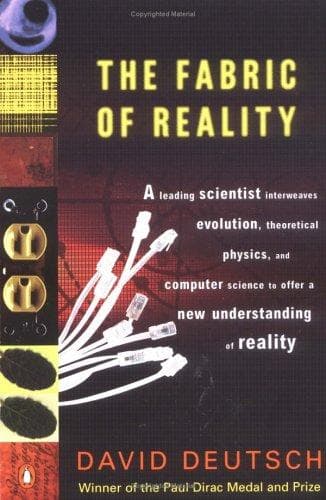
David Deutsch
Deutsch argues that reality is best understood as the intersection of four strands — quantum physics (many-worlds), the theory of computation, epistemology (Popper), and evolution. Together they form a Theory of Everything in which the multiverse is literal, knowledge is physical, and problems are soluble.
8 min guide
Book review
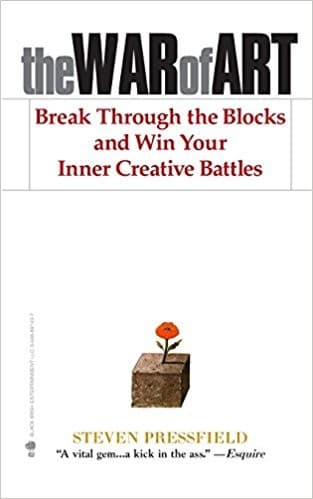
Steven Pressfield
Pressfield names the enemy every creator faces — Resistance, with a capital R — as a universal, personified, implacable force that opposes any work that requires us to grow. Short chapters, almost koans. The book itself is an act of defiance against Resistance, demonstrating its own argument.
5 min guide