Skip to content
FrankX.AI
← All collections

A FrankX reading collection · 24 books

Meaning, habits & growth

Meaning can be a philosophical question or a daily structure. This shelf moves between both: Frankl’s account, the different histories of ikigai, and the practical mechanics of habit. Keep memoir, research, and motivational claims distinct as you read.

Browse the shelves

24 books

The Book of Secrets by Frank — book cover

Book review

The Book of Secrets

Frank

The Book of Secrets names the twelve plain truths every working maker learns too late — the blank page, volume, the taste gap, constraints, stealing, the edit, showing up, standards, finishing, shipping, the long game, and the making itself. It is the craft companion to The Wordless Laws: where that book conceals the forces of how a life is made, this one reveals the forces of how great work is made, openly and at the start, where they can still save you the decade.

6 min guide

Book review

E-Squared: Nine Do-It-Yourself Energy Experiments That Prove Your Thoughts Create Your Reality

Pam Grout

Grout reframes manifestation as a lab experiment: nine short, time-boxed tests you run on yourself in 48 hours or less, each designed to give you firsthand evidence that attention and expectation shape what shows up. The pitch is "don't believe me, prove it" — treat the universe like a science fair partner and watch for the result.

6 min guide

Book review

The Wordless Laws

Frank

The Wordless Laws shows twelve forces at work without ever naming them — they live in the story, the imagery, and the structure, so the reader discovers each law rather than being handed a list. The concealment is deliberate: a principle you excavate yourself sticks far harder than one you are told. It pairs with a forthcoming Book Two that finally names the forces, turning the pair into a discover-then-confirm sequence.

6 min guide
Ikigai-ni-Tsuite (生きがいについて) by Mieko Kamiya — book cover

Book review

Ikigai-ni-Tsuite (生きがいについて)

Mieko Kamiya

The foundational psychiatric study of ikigai — published in Japanese in 1966, still largely untranslated. Kamiya was a psychiatrist at the Nagashima Aiseien leprosarium in Okayama; she watched patients whose external lives had been forcibly stripped reconstruct a reason to wake up, and built a clinical theory from what she observed. Forty years before the West translated her work, she had already named the distinction between ikigai-no-taishō (the object that gives meaning) and ikigai-kan (the felt sense of having meaning).

5 min guide
Ikigai: The Japanese Secret to a Long and Happy Life by Héctor García & Francesc Miralles — book cover

Book review

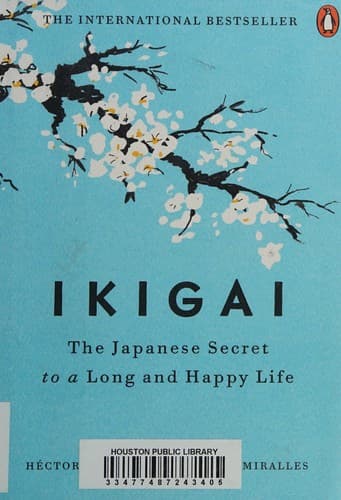
Ikigai: The Japanese Secret to a Long and Happy Life

Héctor García & Francesc Miralles

Two Spanish authors — a Tokyo-resident software engineer and a Barcelona-based novelist — travel to Ogimi, the Okinawan "village of longevity," and interview its centenarians about why they live so long and stay so engaged. The book is the one responsible for ikigai's global pop-culture moment (3M+ copies, 60+ languages). It is a useful entry, especially for the Ogimi village fieldwork, but it also imports the 2014 four-circle Venn as if it were Japanese — which it is not. Read for the Okinawan voices, hold the Venn loosely.

6 min guide
The Blue Zones: Lessons for Living Longer From the People Who've Lived the Longest by Dan Buettner — book cover

Book review

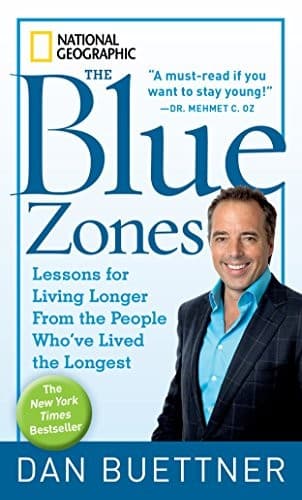
The Blue Zones: Lessons for Living Longer From the People Who've Lived the Longest

Dan Buettner

A National Geographic explorer identifies five regions on Earth where people consistently reach a hundred with the cognition of a sixty-year-old — Sardinia, Okinawa, Nicoya, Ikaria, Loma Linda — and reverse-engineers nine practices common to all five. The 2005 NatGeo cover story put the Japanese word "ikigai" on Western newsstands for the first time. The book is the field-work argument that longevity is structural, not heroic — built into how people eat, move, belong, and answer the question of what to do today.

7 min guide

Book review

The Little Book of Ikigai: The Essential Japanese Way to Finding Your Purpose in Life

Ken Mogi

A Japanese neuroscientist (Sony Computer Science Laboratories) writes the explicitly Japanese-native antidote to the four-circle Venn. Mogi offers Five Pillars — start small, release yourself, harmony & sustainability, joy of little things, be in the here and now — and treats ikigai as a daily-meaning practice, not a career-optimization puzzle. The closest English-language proxy to Kamiya's 1966 clinical thinking, written with neuroscience and Zen sensibilities in roughly equal measure.

5 min guide

Book review

No Bad Parts

Richard C. Schwartz

Schwartz, the founder of Internal Family Systems, makes the case that the mind is not one voice — it is a system of parts (managers, firefighters, exiles) governed by a Self with eight leadership qualities. There are no bad parts, only burdened ones. The model is one of the cleanest available frameworks for personal development, leadership, and (in our extension) for designing self-led AI architectures.

7 min guide
Awaken the Giant Within by Tony Robbins — book cover

Book review

Awaken the Giant Within

Tony Robbins

Robbins's 500-page magnum opus and the foundation for nearly every modern motivational system that followed. Synthesizes NLP, behavioral psychology, decision-theory, and his own "Neuro-Associative Conditioning" into a single self-improvement architecture. The argument: master the meanings you assign, the questions you ask, the metaphors you live by, and you control the trajectory of your life.

8 min guide
Money: Master the Game by Tony Robbins — book cover

Book review

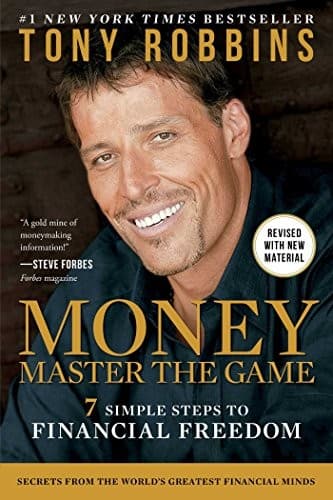
Money: Master the Game

Tony Robbins

Robbins interviews Ray Dalio, Carl Icahn, Warren Buffett, John Bogle, David Swensen and ~50 other top investors and synthesizes their patterns into a personal-finance system for ordinary readers. The thesis: index funds + asset allocation + tax efficiency + behavioral discipline beats almost everything else over a lifetime. Long, repetitive, pitchy in places — but the core financial guidance is sound and free.

9 min guide
The 4-Hour Body by Tim Ferriss — book cover

Book review

The 4-Hour Body

Tim Ferriss

Ferriss applies his 80/20 lifestyle-design lens to the human body — fat loss, muscle gain, sleep, sex, sport. Rather than write a comprehensive textbook, he delivers minimum-effective-dose protocols for each domain. Some claims (slow-carb diet, Occam protocol) are well-supported; others (cold thermogenesis, ice-bath weight loss) are speculative. The 80/20 framework is the contribution; treat specific protocols as hypotheses.

8 min guide