Modern commentary
Tantra Illuminated
Christopher D. Wallis
A modern introduction to the history and philosophy of Tantric traditions, useful for placing popular uses of the word Tantra in context.
2 min guideA FrankX reading collection · 15 books
These books ask how to act, what to value, and how much certainty a person needs. The Tao Te Ching and Zhuangzi form one conversation; Marcus Aurelius and Viktor Frankl enter from very different histories. Compare their arguments before borrowing their conclusions.
15 books
Modern commentary
Christopher D. Wallis
A modern introduction to the history and philosophy of Tantric traditions, useful for placing popular uses of the word Tantra in context.
2 min guidePrimary text
Umasvati
A systematic Jain work concerned with reality, the soul, karma, and liberation, available in English as That Which Is.
2 min guidePrimary text
Sayings of Confucius, compiled by followers
A collection of conversations and sayings concerned with ethical cultivation, learning, relationships, and government.
2 min guidePrimary text
Traditionally attributed to Vyasa
A dialogue between Krishna and Arjuna about action, knowledge, devotion, and liberation, situated within the Mahabharata.
2 min guidePrimary text
Mahayana Buddhist scripture
A short Perfection of Wisdom scripture centred on emptiness and the relation between form and emptiness.
2 min guidePrimary text
Multiple teachers and textual traditions
A family of texts exploring self, ultimate reality, knowledge, and liberation through dialogues, stories, and instruction.
2 min guidePrimary text
Attributed to Patanjali
A compact classical account of yoga concerned with mind, practice, and liberation. Its scope extends well beyond physical postures.
2 min guidePrimary text
Zhuangzi and later contributors
A Daoist philosophical collection that uses stories, humour, paradox, and shifting perspectives to unsettle rigid judgments.
2 min guideReading field note
Ken Keyes Jr.
Keyes built a practical system for converting emotion-backed demands into preferences, then using every disturbance as diagnostic feedback. Its durable core is outcome-independent action: want intensely, love without coercion, act decisively, and require no result to certify your wholeness.
22 min guide
Primary text
Lao Tzu
The Tao Te Ching is a compact study of non-forcing: create the conditions, remove the excess, and let the essential work move. Its value for builders is not withdrawal from ambition, but ambition with enough internal and operational space to last.
6 min guideBook review
Rick Rubin
Rick Rubin’s first book is the inner-state manual for the collection: not "make content" but how to be tuned enough that creation passes through you. Across 78 short meditations he argues the quality of your art is a direct function of the quality of your attention — and that your lifestyle should make you more receptive, not merely more stimulated. Draws on Zen and Taoist frames without citing them.
7 min guide
Book review
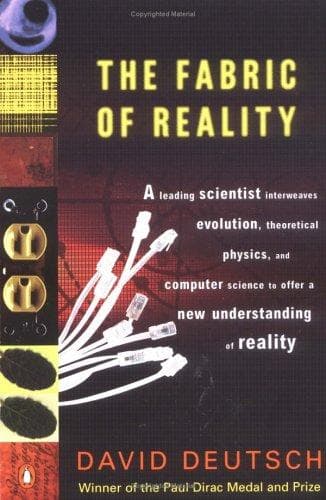
David Deutsch
Deutsch argues that reality is best understood as the intersection of four strands — quantum physics (many-worlds), the theory of computation, epistemology (Popper), and evolution. Together they form a Theory of Everything in which the multiverse is literal, knowledge is physical, and problems are soluble.
8 min guide
Book review
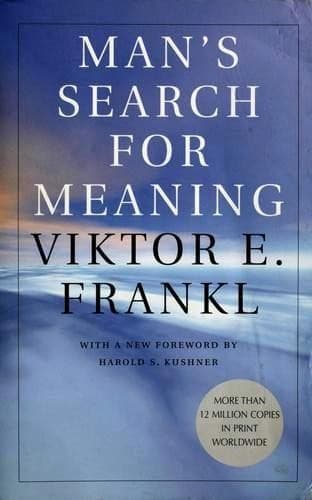
Viktor E. Frankl
A psychiatrist's account of surviving Auschwitz and three other Nazi camps, and the school of psychotherapy — Logotherapy — he built from what he learned there. The argument: meaning, not pleasure, is the primary human drive, and access to meaning is what determines whether a person survives impossible conditions. One of the most cited books of the 20th century.
6 min guide
Book review
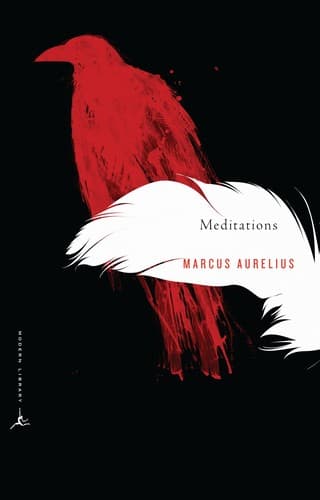
Marcus Aurelius
The private notebook of a Roman emperor working out how to live well under the hardest conditions of his time. Twelve "books" of aphorisms on control, duty, mortality, and perception — not a treatise for publication, but a man arguing with himself in ink. The most practical philosophy ever written.
7 min guide
Book review
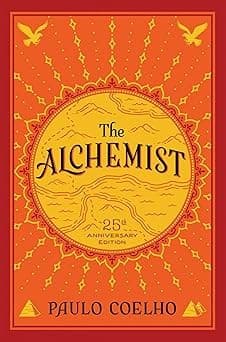
Paulo Coelho
A shepherd named Santiago leaves everything he knows to chase a recurring dream of treasure at the Pyramids. The novel is ostensibly about the journey; it is actually a parable about how purpose, attention, and the willingness to begin shape reality. Short, simple, often life-redirecting.
5 min guide