The short answer
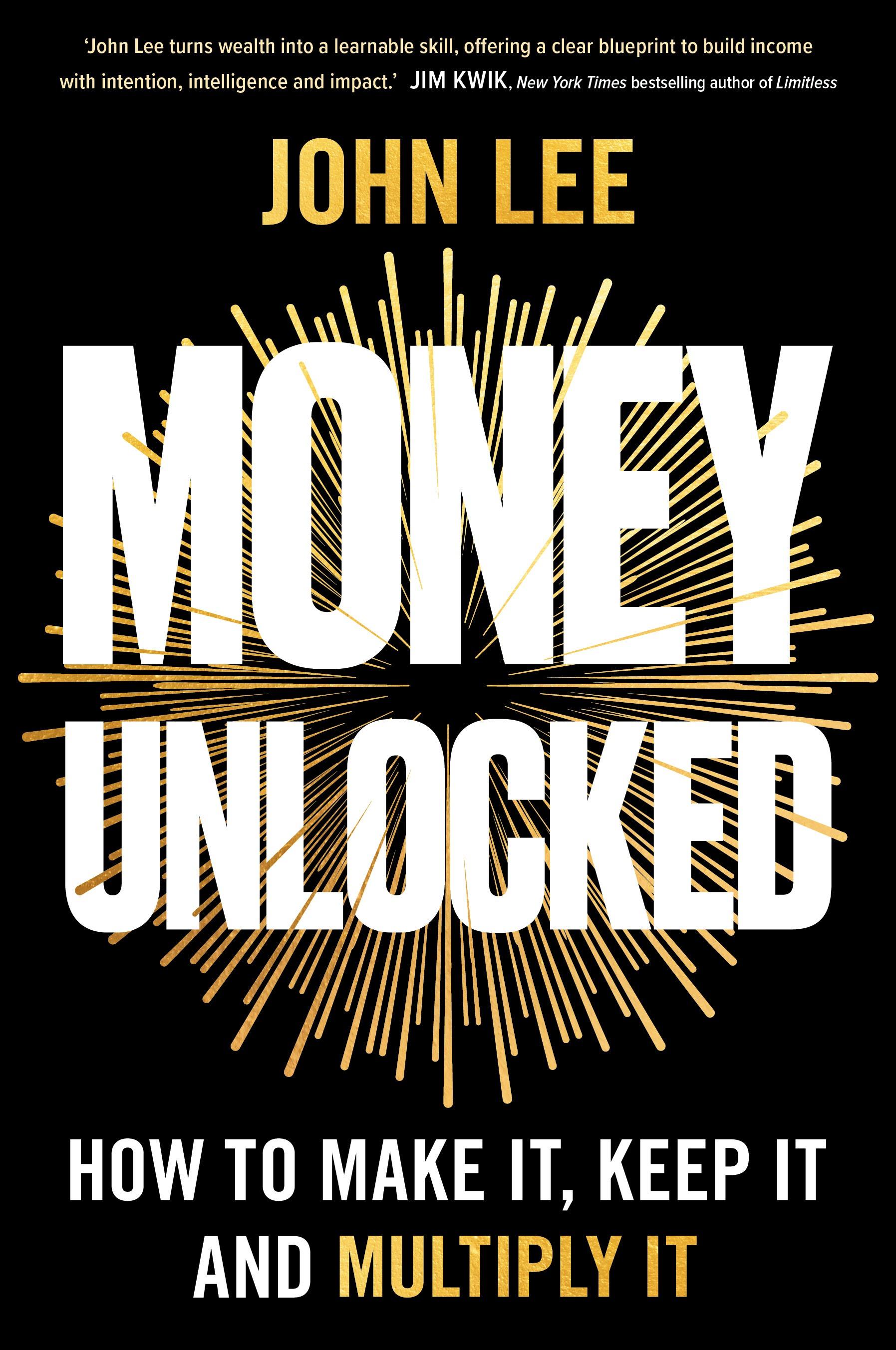
Money Unlocked by John Lee separates earning from owning: active income creates cash, while systems, assets, and distribution create durable wealth and control over time. Its practical spine is a 30/30/30/10 allocation framework, a progression from active to passive to leveraged income, and a plan built around a personal Freedom Number.
Key Insights
- Income, wealth, and financial freedom are different measurements. A high income can still leave someone exposed if spending rises with earnings, while wealth is built from what is retained, owned, and made productive.
- The income ladder moves from active income to passive income and then to leveraged income. Each stage reduces the direct connection between hours worked and money earned by adding assets, systems, people, media, or technology.
- The 30/30/30/10 framework gives every inflow a job before lifestyle spending can absorb it. The deeper principle is pre-commitment: decide how money will be protected, deployed, and enjoyed before it arrives.
- A resilient money ecosystem has no single point of failure. Multiple income sources, cash protection, productive assets, marketable skills, and strong relationships work together so one lost client or role does not collapse the whole structure.
- The Freedom Number turns financial independence from a vague ambition into a design constraint. Once the cost of the desired life is explicit, the reader can work backwards into required income systems, assets, skills, and milestones.
Chapter-by-Chapter
Each chapter carries a key idea and a short summary, so you can find the argument again.
01Wealth Redefined: Exposing the Biggest Lie You've Ever Been Told
Earning more is not the same as becoming wealthy or financially free.
OpenClose
Lee opens by separating income, visible consumption, net wealth, and control over time. The chapter replaces salary as the default scorecard with a broader question: how long can your life and choices continue without the next hour of paid work?
02Smart Work vs. Hard Work
Effort matters, but repeatable outputs matter more than hours accumulated.
OpenClose
Hard work creates capacity and credibility, yet it reaches a ceiling when every result still depends on the founder or employee being present. Lee reframes smart work as choosing tasks that can be documented, repeated, automated, delegated, or distributed.
03From Active to Passive Income, or How to Make Money While You Sleep
Build an income ladder that progressively separates revenue from personal time.
OpenClose
The book distinguishes active income from passive and leveraged income, then treats them as a sequence rather than competing identities. Active work can finance the assets and systems that later produce recurring income, provided the reader deliberately converts one form into the next.
04Turning Ideas into Dollars
An idea gains economic value when it solves a defined problem for a reachable audience.
OpenClose
This chapter moves from inspiration to offer design. Lee focuses attention on packaging knowledge, testing demand, communicating a result, and selecting distribution that can reach more people without rebuilding the product for every sale.
05Economic Resilience
Financial strength is the ability to absorb disruption without desperate decisions.
OpenClose
Resilience comes from reducing fragile debt, maintaining liquidity, and avoiding dependence on one customer, platform, employer, or asset. The goal is not perfect prediction; it is enough margin and optionality to keep making sound decisions when conditions change.
06Building Your Money Ecosystem
Cash flow, protection, growth, and opportunity should operate as one connected system.
OpenClose
Lee brings the book's components together as an ecosystem rather than a collection of isolated tactics. The 30/30/30/10 framework supplies a recurring allocation rhythm, while income streams and assets give the system multiple ways to replenish and grow.
07The Power of Minimalism
A lighter cost structure increases the amount of life that money can support.
OpenClose
Minimalism here is financial architecture, not aesthetic austerity. Fewer fixed obligations lower the Freedom Number, reduce pressure to accept poor work, and leave more capital available for protection, learning, and productive ownership.
08Clear Visions, Strategic Actions
Translate the desired life into numbers, deadlines, and the next controllable actions.
OpenClose
A financial plan becomes useful when it connects a specific future to present behavior. Lee works backwards from the target lifestyle and Freedom Number, turning aspiration into income requirements, capability gaps, and near-term priorities.
09Investing in Yourself
Skills, energy, judgment, and reputation are the first assets most readers can improve.
OpenClose
Before capital is large, personal capability often produces the highest practical return. The chapter treats education, health, communication, and marketable expertise as assets that raise earning power and improve the quality of opportunities available.
10The Network-Net Worth Connection
Relationships expand access to information, trust, partnerships, and opportunity.
OpenClose
Lee presents networking as reciprocal value creation rather than collecting contacts. A useful network is built by becoming credible, helping before asking, and staying close to people whose standards and knowledge improve your decisions.
11Thinking Bigger and Amplifying Impact
Scale arrives when a useful result can travel through systems, teams, media, or technology.
OpenClose
This chapter shifts the reader from personal productivity to multiplied output. The question changes from how much one person can complete to how a proven result can reach more people with consistent quality and less dependence on the originator.
12The Secret of the Ultra-Rich
Durable fortunes are tied to ownership, distribution, and systems rather than wages alone.
OpenClose
Lee contrasts selling time with owning assets and infrastructure that participate in growth. The practical lesson is not imitation of extreme wealth; it is to keep converting earned income into productive ownership and to understand where value accumulates in a business model.
13Your Roadmap to Limitless Wealth
Choose a starting point, install a review rhythm, and compound the system over time.
OpenClose
The final chapter consolidates mindset, income design, allocation, resilience, capability, and relationships into one operating plan. Progress comes from sequencing the work and reviewing it consistently, not from attempting every tactic at once.
Best For
Frequently Asked Questions
What is Money Unlocked by John Lee about?
+
It is a practical wealth-building book about moving beyond income as the only financial scorecard. Lee combines money mindset, a 30/30/30/10 allocation framework, active-to-passive-to-leveraged income, resilience, self-investment, relationships, and a personal Freedom Number.
What are the three types of income in Money Unlocked?
+
Lee describes a progression from active income, which depends directly on your work, to passive income produced by assets or repeatable systems, and then leveraged income that can expand through people, media, capital, or technology. The point is to use active income as a funding source for the later stages rather than treating them as shortcuts.
What is the 30/30/30/10 strategy?
+
It is Lee's percentage-based framework for assigning money to distinct purposes so protection and growth are planned before discretionary spending. The publisher materials confirm the framework but do not publish its complete category-level implementation, so readers should use the book itself rather than substitute a similarly named internet budget rule.
Who should read Money Unlocked?
+
It is best suited to professionals, creators, and entrepreneurs who can generate income but want a clearer system for retaining it, creating additional income sources, and reducing dependence on their own hours. Readers seeking security selection, tax planning, or individualized portfolio advice will need specialist resources as well.
Is Money Unlocked a New York Times bestseller?
+
Yes. The current Hay House Business and Penguin Random House editions identify Money Unlocked as a New York Times bestseller. The book was published in 2026 in paperback, ebook, and audiobook formats.
Does Money Unlocked provide financial or investment advice?
+
It provides educational frameworks for money management, income design, risk, and opportunity. It does not replace advice tailored to your jurisdiction, taxes, debts, risk tolerance, or investment objectives; use a qualified professional for decisions where personal circumstances materially change the answer.
Continue Reading
If Money Unlocked opened a door, these books walk you through it. Curated for reason, not algorithm — each entry explains why it pairs with this book.
The Psychology of Money
by Morgan Housel
Housel supplies the behavioral counterweight to Lee's operator mindset. Money Unlocked explains how to build income systems; Housel explains why intelligence alone does not prevent status spending, impatience, or poor risk decisions.
Get the bookI Will Teach You to Be Rich
by Ramit Sethi
Sethi is the stronger implementation manual for automated personal finance. Pair his account-level mechanics with Lee's wider ambition around income streams, ownership, and control over time.
Get the bookRich Dad Poor Dad
by Robert T. Kiyosaki
The intellectual ancestor for the active-income versus asset-income distinction. Lee offers a more current, creator-and-entrepreneur version of the same shift from wages toward ownership.
Get the bookProfit First
by Mike Michalowicz
Profit First narrows the allocation problem to business cash and solves it with bank-account behavior. Read it when the 30/30/30/10 principle makes sense conceptually but your company still consumes every dollar it earns.
Get the bookThe Almanack of Naval Ravikant
by Eric Jorgenson
Naval provides the clearest compact theory of permissionless scale through code, media, capital, and teams. It sharpens Lee's transition from active work to income that can grow beyond personal hours.
Get the bookThe E-Myth Revisited
by Michael E. Gerber
Gerber explains why a business that depends on its owner is still a job. It is the best next read for converting Lee's smart-work principle into documented operations and a company that can function without constant founder intervention.
Get the bookDie With Zero
by Bill Perkins
Perkins is the useful contrarian. Where Lee emphasizes building and multiplying, Die With Zero asks when continued accumulation starts stealing time and experiences from the life the money was meant to support.
Get the bookGo Deeper — Videos
A link marked YouTube search opens YouTube results. Any other link opens the page saved with this book.
John Lee: Money Unlocked, How to Make It, Keep It, and Multiply It
BookThinkers: Life-Changing Books
A focused release-day interview on money in the age of AI, the financial traps that survive higher earnings, and the skill combinations Lee believes change a person's trajectory.
Money Unlocked: The Hidden Secret Behind Financial Freedom with John Lee
Smart Money with Chris Swartz
Lee connects the book's ideas about money, systems, mindset, and artificial intelligence. Useful for readers who want the current business context around the personal-finance framework.
Why AI Needs Your Creativity to Scale with John Lee
Makes Sense with Dr. JC Doornick
A longer conversation that reaches Money Unlocked at the 43-minute mark, including the three parts of making money and the Freedom Number. The first half shows how Lee connects human direction with technology-enabled scale.
John Lee Explains Money Unlocked
John Lee and guest podcasts
A live search for Lee's launch interviews, short explainers, and audience Q&A sessions. Use this route for the newest appearances without hard-coding an unverified video URL.
If You Liked This, Read Ours
Our Book
The Art of Self-Development
Seven Pillars of a Complete Life
A systematic approach to building every dimension of your life — energy, mind, soul, craft, capital, circle, and legacy. Not theory. Routines that work.
Read freeThe FrankX Newsletter
One book breakdown like this. One spotlight from the operating loop. Every Friday.