Bio-Tech Design Concepts
Instruments Reimagined
Where engineering precision meets living intelligence. Concert grand pianos with neural network strings. Violins with mycelium acoustics. Synthesis controllers grown from coral. Every concept pushes beyond what instruments could be in 2026 and beyond.
6 Concepts
Gemini 3 Pro
High Resolution
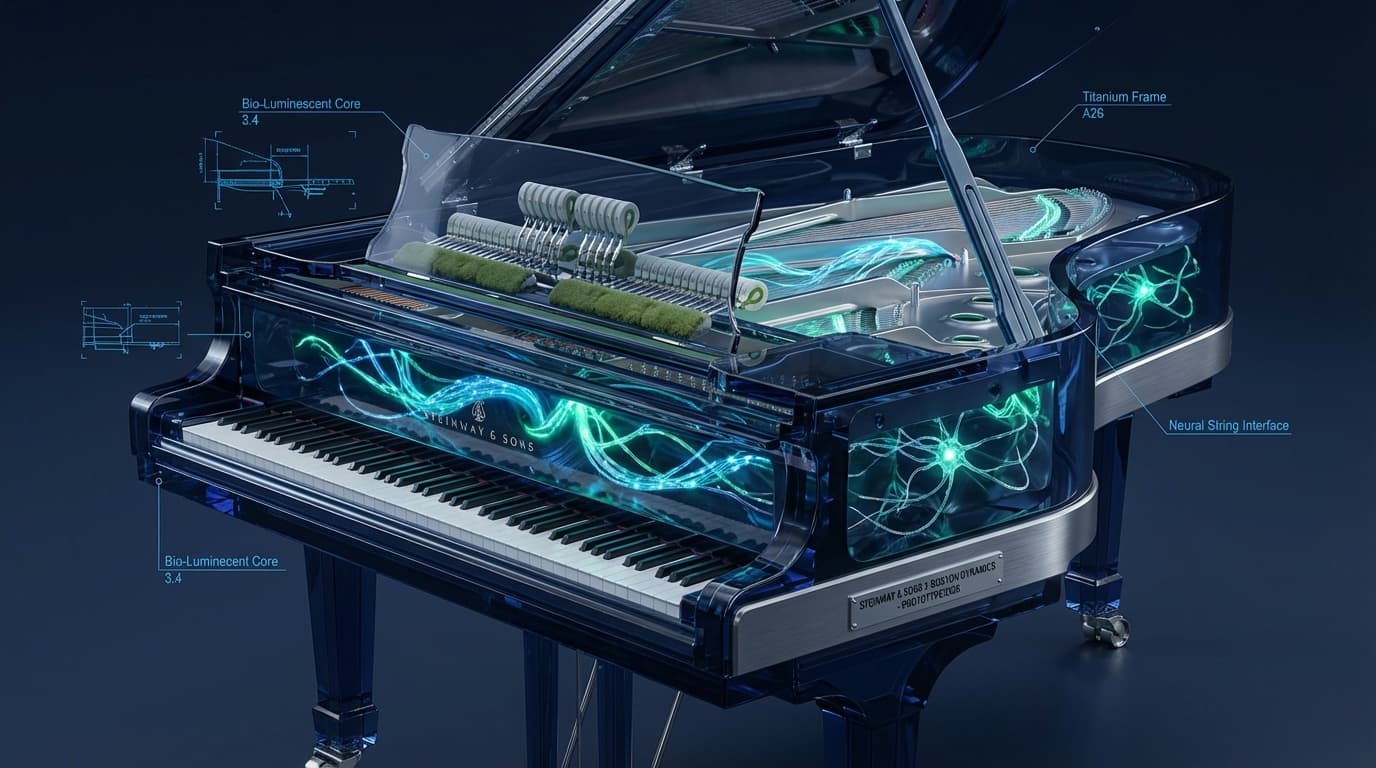
Bio-Tech Grand Piano — Glass + Titanium + Neural Networks
Engineering Precision
Every component is designed with real acoustic engineering principles — soundboard grain patterns, string tension calculations, resonance chamber geometry.
Living Intelligence
Mycelium networks, bioluminescent cells, and neural sensors transform passive instruments into responsive, adaptive organisms.
Performance Heritage
Bio-tech augments tradition rather than replacing it. A grand piano is still a grand piano — just one that can feel what you play.
All Concepts
Click any image to view full resolution with generation prompt.
nano-banana
Featured
Bio-Tech Grand Piano
Photorealistic cutaway view of a concert grand piano reimagined with biotechnology: transparent glass body revealing titanium skeletal frame, bioluminescent neural network strings that glow cyan when struck, mycelium-threaded soundboard with golden circuit traces, dark navy studio background with subtle volumetric lighting
pianoglasstitanium
nano-banana
Featured
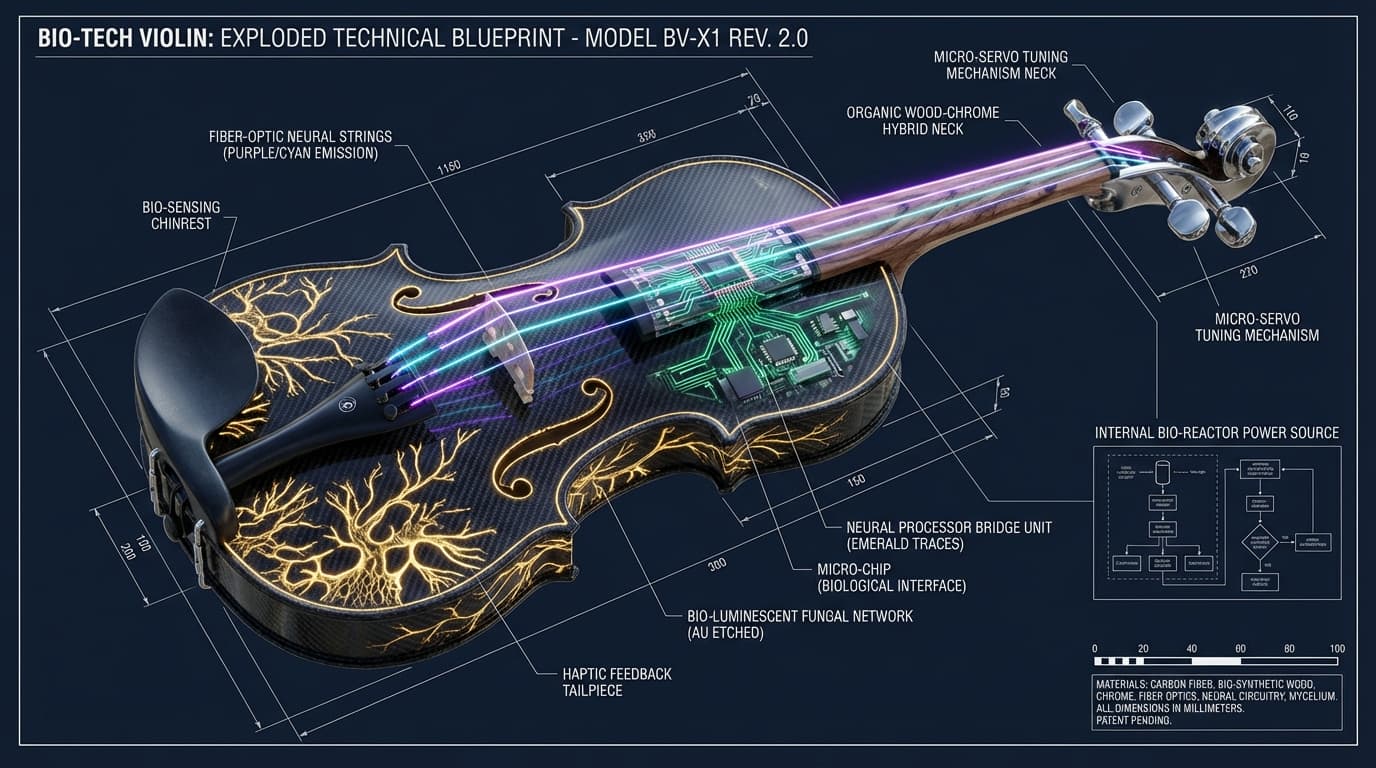
Bio-Tech Violin Blueprint
Technical exploded-view blueprint of a bio-tech violin: carbon-fiber body with transparent amber resin panels, mycelium-grown acoustic chambers visible inside, fiber-optic strings that transmit light as sound, engineered bridge with micro-sensor array, dark background with precise measurement annotations in cyan
violinblueprintcarbon-fiber
nano-banana
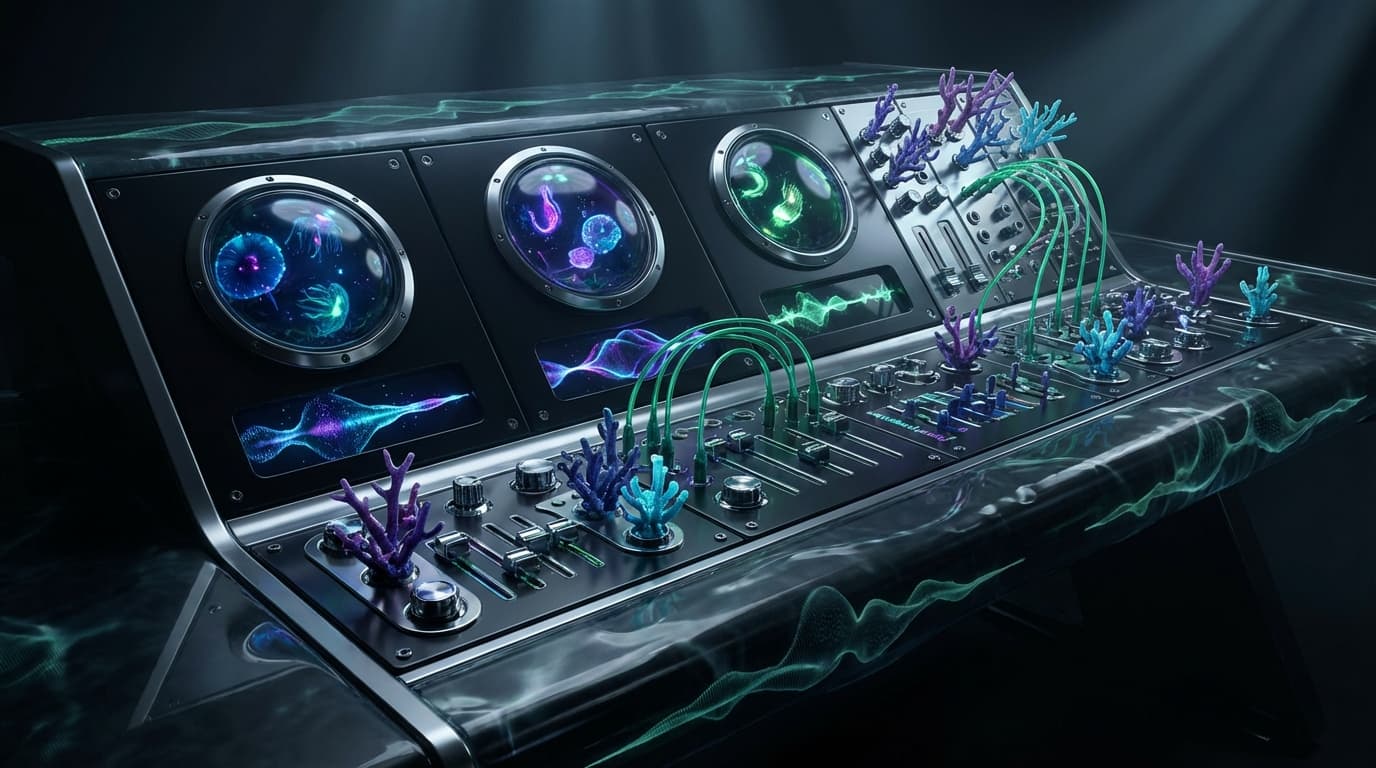
Bio-Tech Synthesis Controller
Futuristic music production desk merging organic and technological: obsidian glass panels with living coral-like controller knobs that pulse with audio signal, bio-luminescent fader strips, transparent display showing waveforms rendered as bio-film organisms, dark studio environment with purple and cyan accent lighting
synthesizercontrollercoral
nano-banana
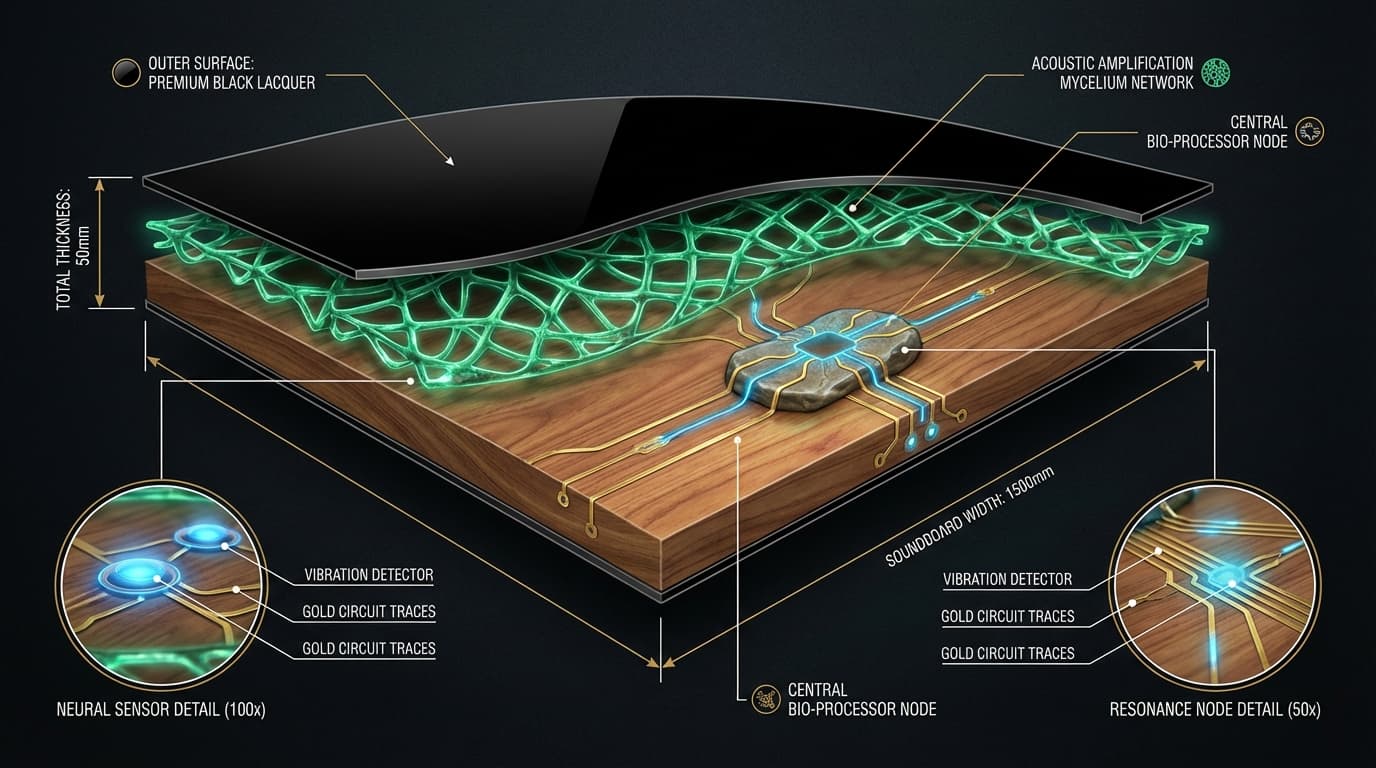
Mycelium Soundboard Cross-Section
Extreme close-up cross-section of a piano soundboard reimagined: traditional spruce grain replaced with engineered mycelium acoustic channels that branch like river deltas, embedded gold nano-wire pickups at each node, neural pressure sensors along the bridge, macro photography style with shallow depth of field, dark background
soundboardmyceliumcross-section
nano-banana
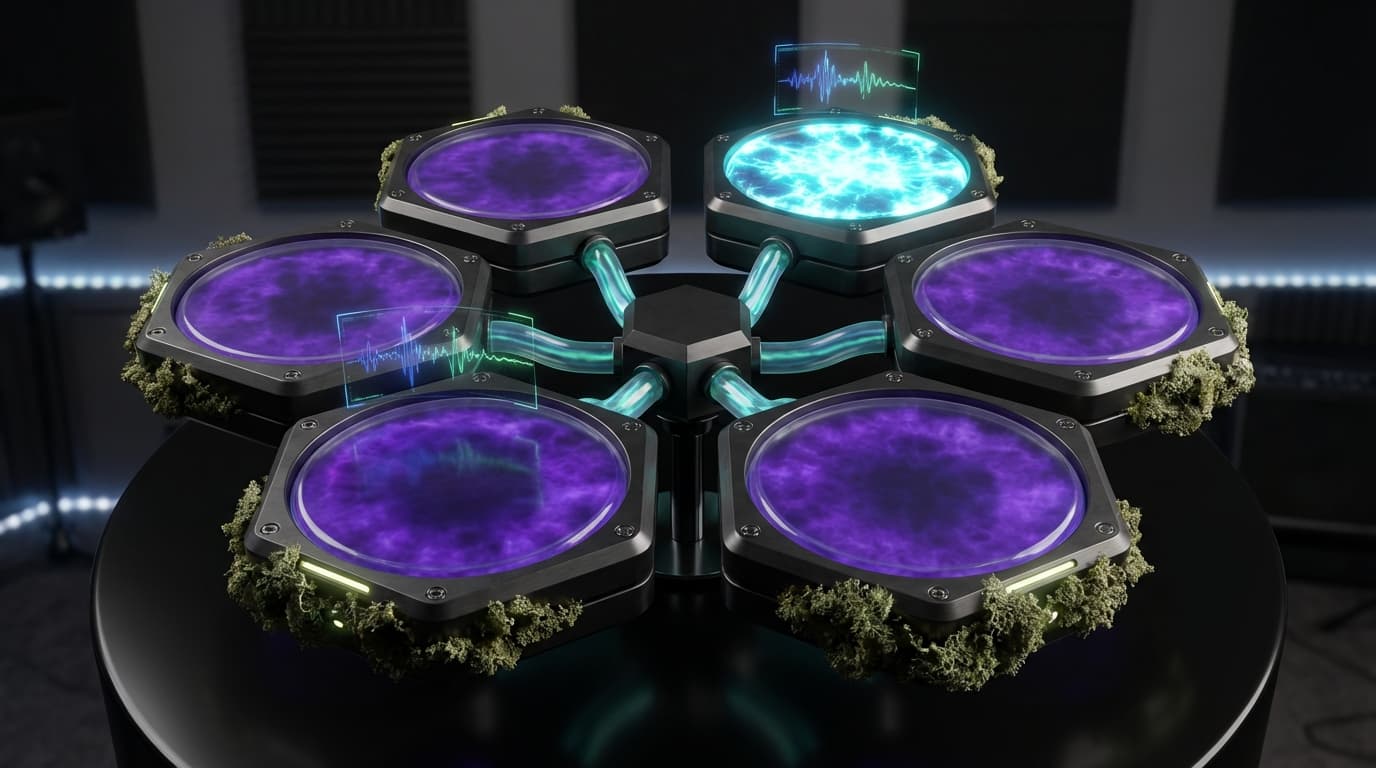
Bio-Tech Hex Drum Array
Array of hexagonal drum pads built from bio-tech materials: translucent silicone surfaces over bioluminescent cells that change color with strike intensity (blue→cyan→green→gold), titanium honeycomb housing, visible piezo-neural sensor mesh underneath each pad, arranged in ergonomic cluster, dark performance stage lighting
drumshexagonalbioluminescent
nano-banana
Featured
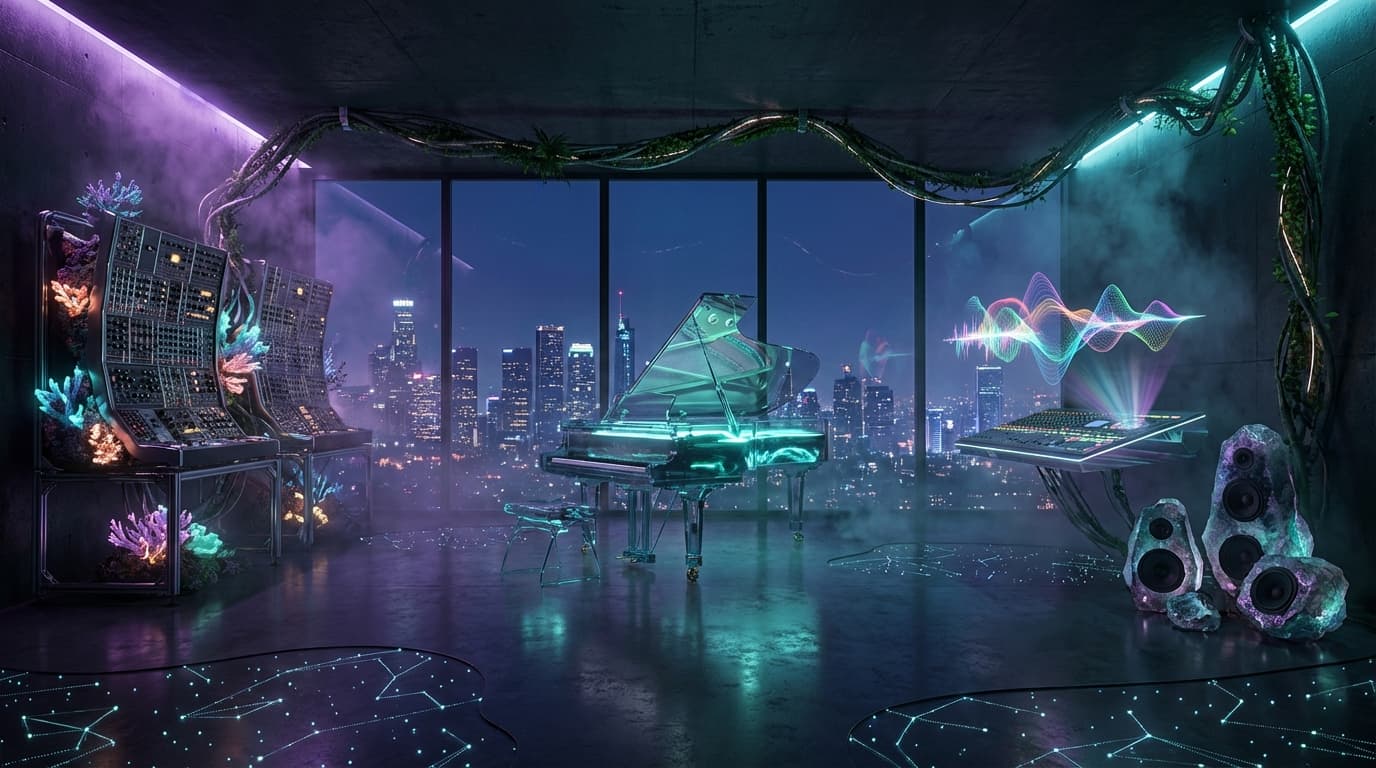
Future Music Laboratory
Wide establishing shot of a future music laboratory: bio-tech grand piano as centerpiece, walls of living acoustic panels that breathe and adjust, holographic sheet music floating above instruments, ceiling of engineered crystal stalactites for natural reverb, floor channels with flowing bioluminescent coolant, a single musician silhouetted working at dawn
laboratorystudioestablishing-shot